
The gist:
-
Dust and debris buildup in desert climates can measurably reduce solar panel output, making periodic cleaning a practical maintenance task rather than a cosmetic one.
-
Professional solar panel washing in Las Vegas, NV typically uses water-fed pole systems with purified water to avoid roof or panel damage.
-
Cleaning frequency and method should match local soiling conditions, panel tilt, and system size rather than a fixed, one-size-schedule.
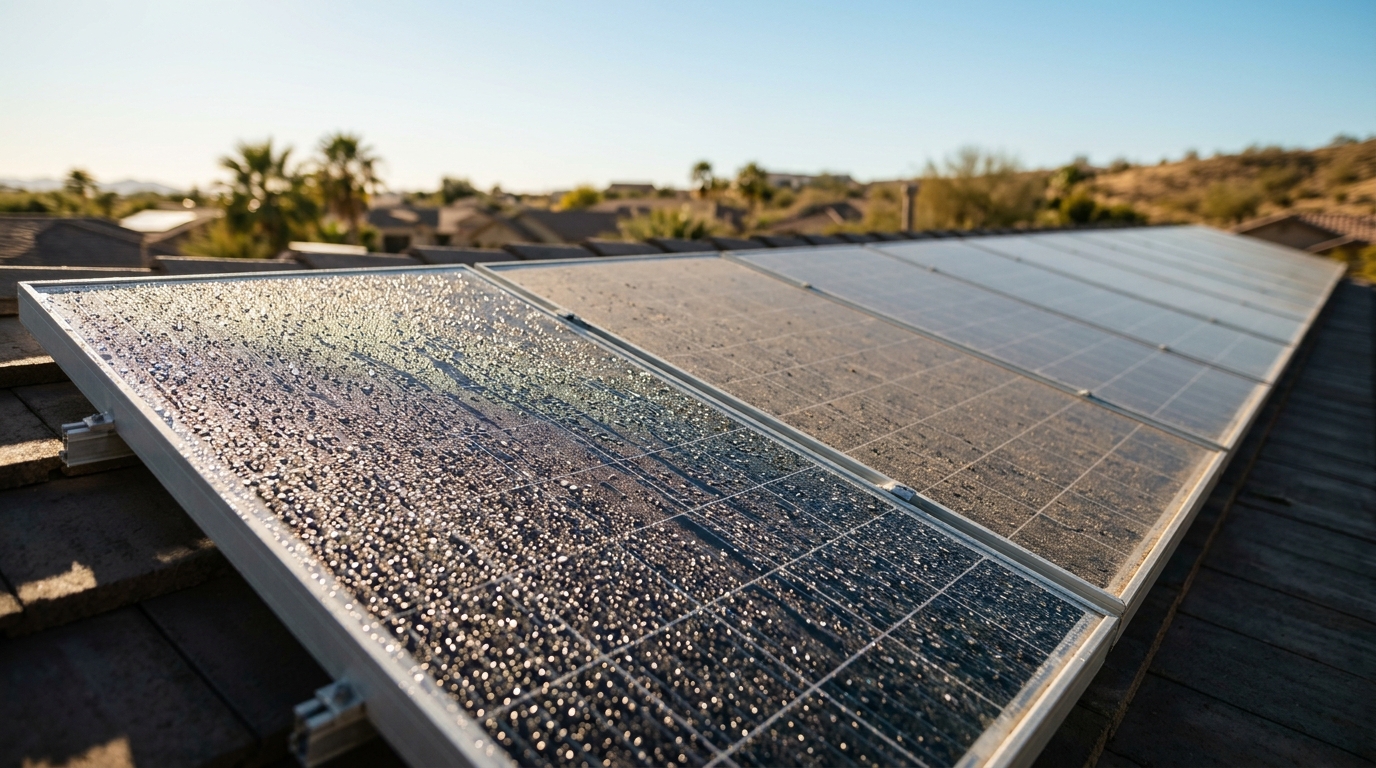
Solar panel washing refers to the professional removal of dust, pollen, and debris from photovoltaic panel surfaces to restore light absorption and maintain energy output. In a desert climate, this service addresses a specific problem: airborne particulate that settles on flat or low-tilt panels and does not wash away naturally between rare rain events.
Property owners researching Solar Panel Washing in Las Vegas are usually trying to solve one of two problems: a noticeable drop in energy production, or a buildup of visible grime after months without rainfall. Either scenario points to the same underlying issue, which is that dust accumulation creates a physical barrier between sunlight and the photovoltaic cells beneath the glass.
Why Dust Buildup Matters in a Desert Climate
Nevada’s arid environment creates conditions where dust, pollen, and fine debris collect on panel surfaces faster than in wetter regions. Research reviewing soiling losses across different geographic locations found that dust can reduce photovoltaic performance by a loss percentage ranging from roughly 7 percent to over 98 percent depending on local conditions, according to a ScienceDirect-published policy framework study.
That wide range reflects how much climate and maintenance history affect the outcome. Key variables include:
-
Dust density – thicker buildup blocks more sunlight per square inch of panel surface.
-
Rainfall frequency – regions with regular rain get natural rinsing; desert climates like Las Vegas do not.
-
Panel tilt angle – flatter panels retain more dust than steeply angled ones.
-
Time since last cleaning – soiling compounds the longer panels go untouched.
Separate laboratory research on cleaning frequency found that daily average soiling loss can range between roughly 0.17 and 0.21 percent, a figure that compounds over weeks or months without cleaning, as reported in a Nature Scientific Reports study on PV soiling prediction.
How Professional Cleaning Differs From DIY Methods
Property owners sometimes consider rinsing panels with a garden hose or a standard pressure washer, but both approaches carry risk. Rooftop panels and the surrounding tile or shingle roofing can be damaged by improper water pressure, incorrect chemicals, or unsafe ladder access.
|
Method |
Typical Equipment |
Risk Level |
Roof Contact |
|
Garden hose rinse |
Standard hose |
Low cleaning effectiveness |
Minimal |
|
Consumer pressure washer |
Gas or electric washer |
High (can crack glass or seals) |
Direct |
|
Water-fed pole system |
Purified water, extension pole |
Low |
None to minimal |
Professional solar panel washing services in the Las Vegas area commonly rely on water-fed pole technology, which allows technicians to clean from the ground or a stable position without walking directly on roof tiles. This method uses purified water rather than tap water, which reduces the mineral spotting that can occur when hard water dries on glass.
Service Scope for Residential and Commercial Systems
Solar panel washing applies to more than single-family rooftops. Larger commercial arrays, multi-unit residential complexes, and ground-mounted systems all accumulate the same type of surface debris, though the scale and access requirements differ.
A typical professional visit addresses:
- Removal of loose dust, pollen, and dried residue from the panel surface.
- Inspection for visible debris such as bird droppings or leaf matter that can create localized hot spots.
- Cleaning around panel edges and mounting hardware where grime collects.
Businesses operating in Las Vegas, NV, including those handling exterior maintenance for window cleaning, solar panel upkeep, and pressure washing, structure these visits separately from standard window service because panel glass and mounting hardware require different handling than typical window surfaces. One provider offering this type of work locally is Powell Window Cleaning, which lists residential and commercial solar panel cleaning among its exterior maintenance offerings.
Frequently Asked Questions
How often should solar panels be cleaned in a desert climate? There is no single verified schedule that applies universally, since soiling rate depends on dust levels, panel tilt, and nearby construction or landscaping activity. Property owners in dusty regions typically monitor output and visible buildup rather than relying on a fixed calendar interval.
Does dust actually reduce energy output, or is this mostly cosmetic? Multiple studies confirm dust creates a physical barrier that scatters sunlight before it reaches photovoltaic cells, though the measured impact varies widely by location and soiling type. The effect is documented, not purely cosmetic, even though the size of the loss differs between studies.
Is it safe to clean panels without professional help? Walking on roofing material or using high-pressure consumer equipment near panel glass and seals carries a real risk of physical damage. Water-fed pole systems are designed specifically to reduce that contact risk.
Does panel cleaning void a manufacturer warranty? Warranty terms vary by manufacturer, so property owners should review their specific solar system documentation before scheduling any cleaning service.
Routine inspection of panel surfaces, paired with a cleaning approach suited to Las Vegas, NV conditions, remains a practical way to monitor whether dust accumulation is affecting system performance.