
Quick take:
-
Water softener installation addresses hard water minerals through a professionally sized ion-exchange system connected to a home’s main water line.
-
The process involves testing water hardness, selecting a properly sized unit, and connecting it before the water heater.
-
Montana households often deal with mineral-heavy groundwater, making professional sizing and placement important for long-term performance.
Water softener installation is the process of connecting an ion-exchange system to a home’s plumbing to reduce calcium and magnesium minerals that cause scale buildup. A correctly sized and placed unit protects pipes, water heaters, and appliances while improving how soap and detergents perform in daily use.
Homes relying on well water or municipal supplies with elevated mineral content are the most common candidates for Water Softener Installation. Hardness is typically measured in grains per gallon or milligrams per liter, and the two units differ: water hardness is measured in parts per million or milligrams per liter, which tell you how many mineral particles are dissolved in the water. Knowing this number before installation determines what capacity the system needs.
Why Hard Water Is a Concern in Montana Homes
Montana’s groundwater often carries higher mineral content because of the geology the water travels through before reaching wells and municipal systems. According to the EPA’s water softener guidance, water with a hardness level greater than 120 mg/L, or 7 grains per gallon, is generally considered hard and may benefit from softening, with softeners often recommended once hardness exceeds 180 mg/L or 10 grains per gallon.
Left untreated, hard water in Montana households can lead to:
-
Scale buildup inside pipes, faucets, and water heaters
-
Reduced efficiency of soaps, detergents, and shampoos
-
Shortened lifespan of dishwashers and washing machines
-
Spotting on glassware and residue on fixtures
Because mineral content varies by well depth and local aquifer conditions, a hardness test is the starting point before any installation decision.
The Water Softener Installation Process
A typical installation follows a consistent sequence regardless of household size or system brand.
-
Water testing – A hardness test (in grains per gallon or mg/L) establishes the baseline mineral load.
-
System sizing – The unit’s grain capacity is matched to household water use and hardness level, since an undersized softener regenerates too often while an oversized one wastes salt and water.
-
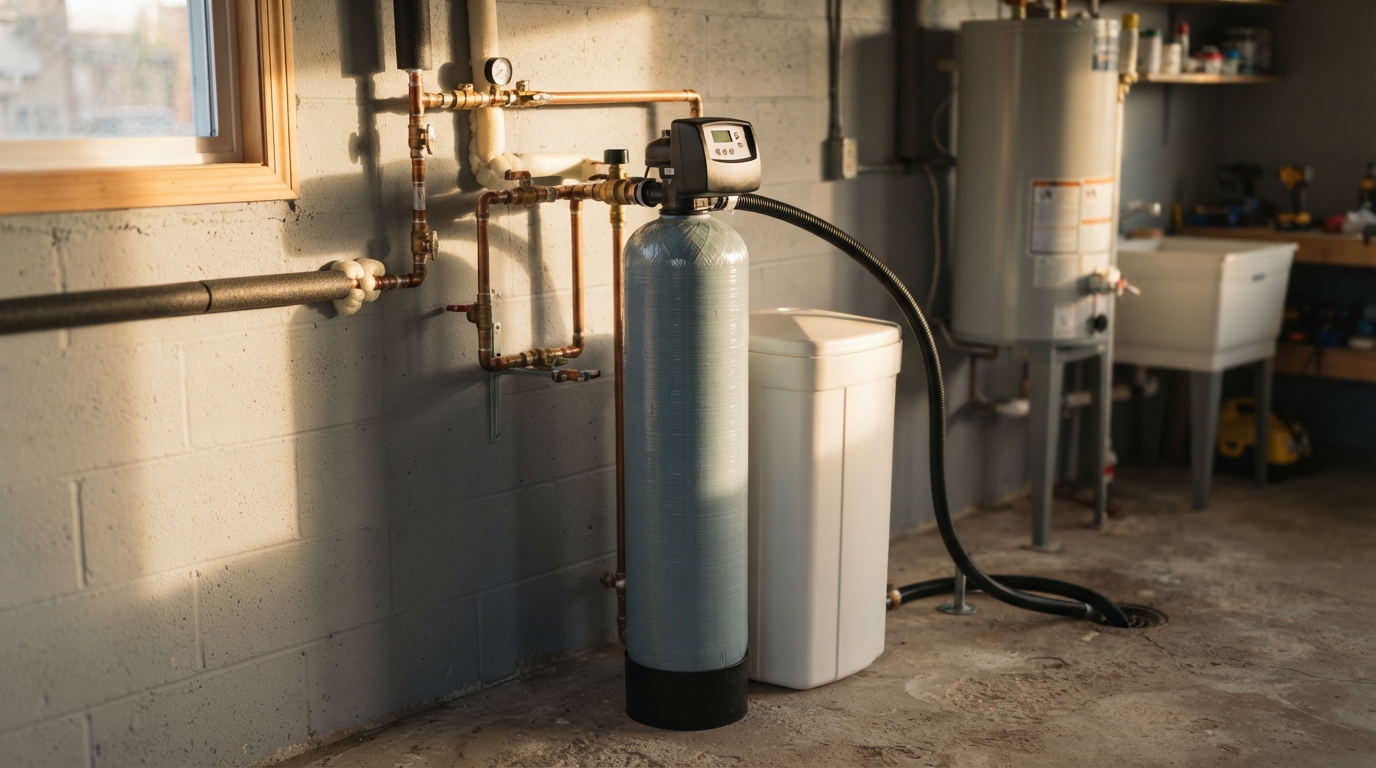
Placement and connection – The softener is installed on the main line, typically before the water heater, so treated water reaches every fixture.
-
Bypass valve setup – A bypass valve allows water to be redirected around the unit during maintenance without shutting off the house supply.
-
Initial regeneration cycle – The system runs its first regeneration to confirm proper salt brine function and softened output.
Selecting a model certified to NSF/ANSI 44 is a widely recommended step, since that certification confirms the unit has been tested in a laboratory and meets safety and performance requirements for water softeners and conditioners.
Comparing Softener System Options
Demand-initiated systems regenerate only when needed rather than on a fixed schedule, which generally reduces salt and water consumption compared to older timer-based designs.
Frequently Asked Questions
How do I know if my Montana home needs a water softener? A water hardness test is the most reliable method. Results above roughly 7 grains per gallon generally indicate a household may benefit from softening, particularly for well water sources common across the state.
Does installation require cutting into existing plumbing? Yes. The unit connects into the main water line, usually ahead of the water heater, so a plumbing connection point and a nearby drain for the brine discharge are both required.
How long does a typical installation take? Most residential installations are completed within a few hours, though timing can vary based on existing plumbing layout and whether additional fittings are needed.
Can a softener be installed alongside a filtration system? Yes. Softeners are commonly paired with separate filtration or reverse osmosis units, since each addresses different water quality concerns such as hardness versus taste, odor, or specific contaminants.
Based in USA, 180 Water serves customers across Montana, offering water treatment services that include 180 Water softening and filtration system installation for residential and well water sources.
Next Steps for Homeowners
Readers weighing a softener installation can review published service area details for 180 Water, which outlines water treatment options available to Montana households.
Water softener installation remains a practical response to hard water problems that affect plumbing, appliances, and everyday cleaning tasks across Montana homes. Matching the right system size to actual hardness levels, verifying NSF/ANSI 44 certification, and following a proper installation sequence are the factors most likely to determine how well a softener performs over its service life.