
Essentially:
- Inground pool construction moves through distinct phases: design and permitting, excavation, structural work, plumbing and electrical, and finishing.
- Timelines vary by pool type, with fiberglass installations generally finishing faster than poured concrete builds.
- Permitting and curing time are often the two most underestimated factors in a project’s overall schedule.
An in-ground pool project follows a predictable sequence of design, excavation, structural installation, and finishing work, with total timelines ranging from a few weeks to several months depending on the pool type and local permitting requirements. Understanding each phase helps homeowners set realistic expectations before construction begins.
For homeowners in San Antonio, TX, researching inground pool construction in San Antonio, TX typically starts with questions about timeline, materials, and what happens at each stage of the build. Knowing what to expect at each milestone makes it easier to plan around weather, permitting delays, and other variables unique to the region.
Planning and Permitting Come First
Every inground pool project begins with site evaluation, design finalization, and permit submission before any digging starts.
- A site visit confirms soil conditions, drainage, and setback requirements.
- The design phase typically takes one to three weeks and includes layout, shape, and feature selection.
- Permitting can range from two weeks to several months depending on the municipality, according to one industry installation timeline guide.
Homeowners should also review safety barrier recommendations early in the planning process, since fencing and gate placement can affect the final pool layout. The U.S. Consumer Product Safety Commission’s pool barrier guidelines recommend four-sided isolation fencing with self-closing, self-latching gates to reduce drowning risk among young children.
Excavation and Structural Work
Once permits clear, excavation shapes the hollow where the pool will sit, followed by the installation of the structural shell.
- Excavation generally takes a few days to two weeks, depending on pool size and soil type.
- For fiberglass pools, the pre-formed shell is lowered into the excavated space shortly after digging.
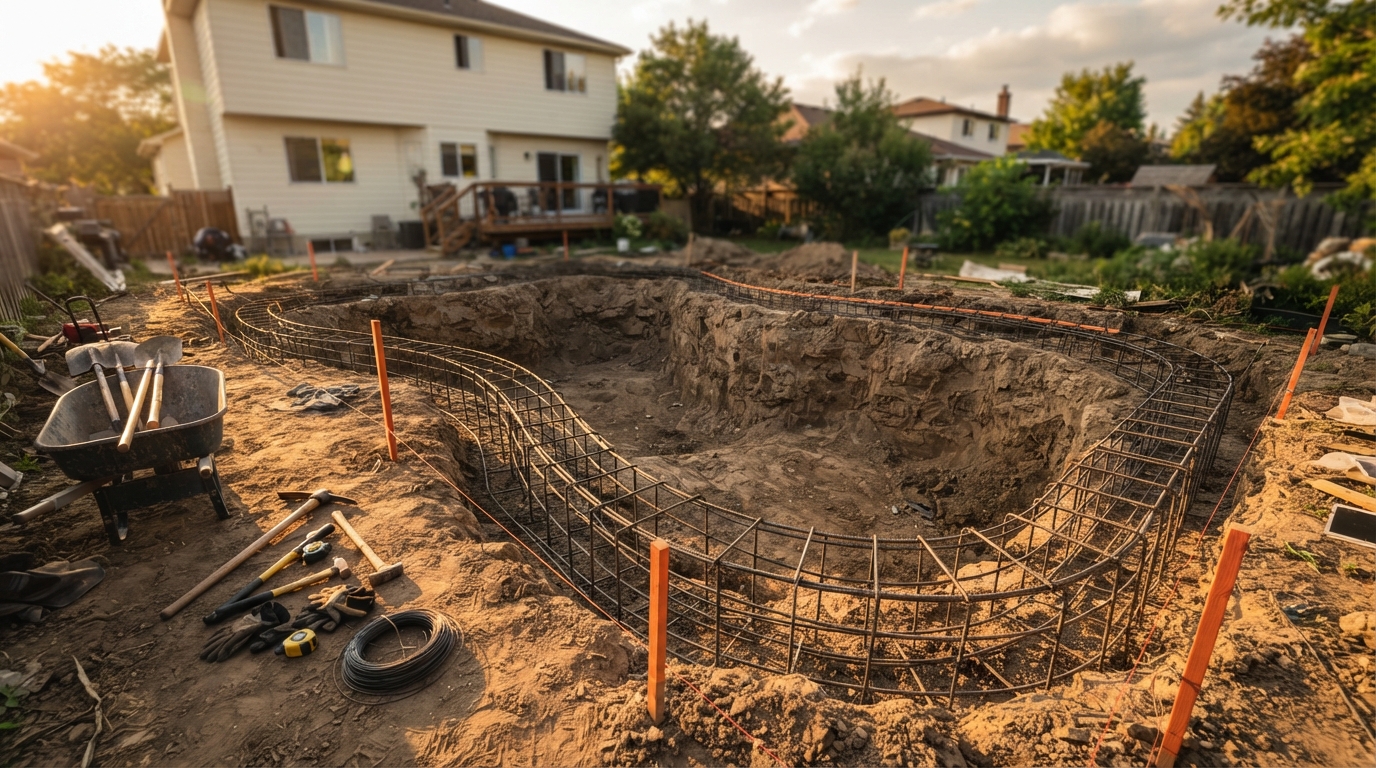
- For poured concrete or gunite pools, steel rebar is installed first to form the structural framework, followed by the sprayed concrete shell.
Fiberglass installations tend to move through this stage faster than concrete builds, since there is no multi-day curing period required before the next phase can begin.
Plumbing, Electrical, and Equipment Installation
Pool functionality depends on the systems installed beneath and around the shell before any finishing work begins.
|
Stage |
Typical Focus |
Approximate Duration |
|
Plumbing |
Return lines, suction, main drain |
Several days to one week |
|
Electrical |
Pump, filter, lighting, automation wiring |
Several days, often concurrent with plumbing |
|
Equipment pad |
Pump, filter, and heater placement |
One to two days |
These systems are installed before decking or interior finishes go in, since access to the shell and surrounding trenches becomes limited once hardscaping begins.
Finishing Touches and Water Fill
The final stage covers decking, tile, coping, interior surface application, and the initial water fill.
- Decking and coping are poured or installed around the pool perimeter.
- Waterline tile is set where applicable.
- The interior surface finish is applied and allowed to cure according to the manufacturer’s specifications.
- The pool is filled with water, and equipment is started up and balanced.
Homeowners in San Antonio, TX should also confirm that fencing and alarm requirements are addressed before the pool is filled, since local permitting often ties final inspection approval to barrier compliance.
Frequently Asked Questions
How long does an in-ground pool installation typically take? Total timelines commonly range from a few weeks for fiberglass installations to several months for concrete or gunite pools, largely depending on permitting speed and curing requirements.
What causes the biggest delays in pool construction? Permitting and curing time are the two stages most likely to extend a project beyond the original estimate, since both depend on factors outside a contractor’s direct control.
Do inground pools require a safety barrier? There is no federal law mandating pool fencing, but the CPSC publishes safety barrier guidelines that many local building codes reference for permit approval.
Is fiberglass or concrete faster to install? Fiberglass shells are pre-formed and generally installed faster than concrete, which requires on-site structural work and extended curing time before finishing.
Final Notes and Local Information
Copano Pools and Spas LLC, based in San Antonio, Texas, is a swimming pool contractor serving the surrounding area. Additional business details are available through its published business profile.
Published project and service area details for Copano Pools and Spas are available for homeowners reviewing local pool construction options.