
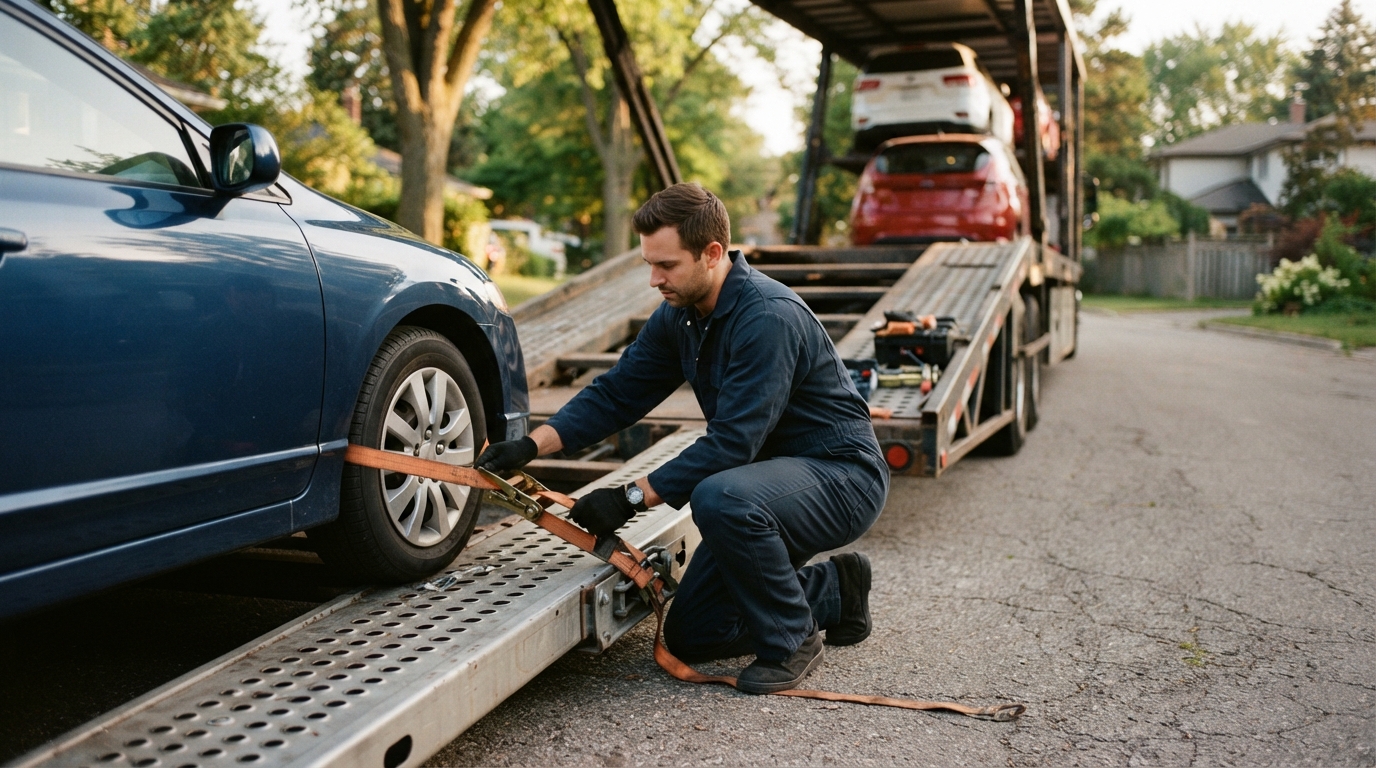
• An auto transportation service arranges licensed and insured carriers to move vehicles between locations without the owner driving them.
• Open and enclosed carrier options, dealership transfers, and seasonal relocation shipments are common offerings in this industry.
• Verifying carrier licensing and insurance through federal registries helps reduce the risk of fraud or damage claims.
A reliable auto transportation service coordinates the pickup, carrier assignment, and delivery of a vehicle so the owner does not have to drive it to a new location. Selecting one that fits a particular move means comparing carrier types, verifying credentials, and understanding how pricing and timing typically work. An Auto Transportation Service generally functions as either a direct carrier or a broker that lines up qualified carriers on a customer’s behalf, and knowing the difference affects what questions to ask before booking.
Vehicle owners in Sunrise, FL who need to ship a car for a job relocation, a dealership purchase, or a seasonal move typically rely on these arrangements because driving long distances adds wear, fuel cost, and time away from other responsibilities. Coordination of this kind depends on matching the right carrier type and schedule to the vehicle and destination.
How Auto Transportation Service Works
Most bookings follow a similar sequence regardless of distance or vehicle type.
• A customer provides vehicle details, pickup location, and delivery destination.
• The provider identifies an available carrier with the correct equipment for the vehicle.
• The vehicle is inspected, loaded, and documented before transit begins.
• Delivery occurs at the agreed location, followed by a final inspection.
Industry listings describe complete auto shipping services including open and enclosed vehicle transport, dealership transfers, relocation shipping, and seasonal moves. These categories cover most common reasons a vehicle owner would choose to ship rather than drive.
Open vs. Enclosed Carrier Options
Carrier type is one of the first decisions in any vehicle shipment, since it affects both exposure to weather and typical cost.
|
Carrier Type |
Vehicle Exposure |
Typical Use Case |
|
Open Carrier |
Exposed to weather and road debris |
Standard sedans, SUVs, daily drivers |
|
Enclosed Carrier |
Fully covered, protected from elements |
Classic, luxury, or high-value vehicles |
|
Door-to-Door |
Pickup/delivery near specified addresses |
Most residential and dealership moves |
Auto transportation service generally includes both open and enclosed car carrier services to accommodate various vehicle types and customer preferences. Carrier coordination also involves matching loading and unloading equipment to the vehicle, since specialized equipment may be required for loading and unloading, which the car carrier services team arranges during scheduling.
Verifying Licensing and Insurance
Before booking, confirming that a carrier or broker holds active operating authority reduces exposure to unlicensed operators. The FMCSA Protect Your Move program maintains consumer complaint data and registration tools that let shippers check a carrier’s authority and safety record before committing to a contract. Reputable providers disclose this information readily rather than requiring a request.
• Confirm the carrier or broker has active USDOT and MC operating authority.
• Ask whether the carrier is licensed and insured for the specific vehicle type being shipped.
• Request a written estimate that specifies pickup and delivery windows.
• Review the inspection report process used at pickup and delivery.
Every auto shipping service arranged should include licensed and insured carriers, which is a baseline expectation rather than a premium feature. Confirming this detail in writing before transit begins helps avoid disputes if damage or delay occurs.
Frequently Asked Questions
How long does vehicle shipping typically take? Transit time depends on distance, carrier route density, and weather along the corridor. Door-to-door scheduling is coordinated around carrier availability rather than a fixed calendar date.
Is enclosed transport necessary for a standard vehicle? Open carriers are standard for most everyday vehicles and are generally more widely available and less costly than enclosed options, which are reserved for higher-value or specialty vehicles.
What documentation should be reviewed at pickup? A condition inspection report noting existing wear, scratches, or damage should be completed and signed by both the customer and the carrier before the vehicle is loaded.
Does a broker drive the vehicle itself? A broker typically arranges transport through a network of carriers rather than operating the truck directly, so confirming which entity physically handles the vehicle is a reasonable question before booking.
Vehicle owners evaluating transport options benefit from comparing carrier types, confirming licensing, and reviewing inspection procedures before committing to a provider. Based in USA, Connect With C & C Car-Go Plus serves customers across Sunrise, FL, coordinating carrier logistics for vehicle owners who prefer shipping over driving long distances.
Next Steps for Vehicle Owners
Reviewing carrier credentials and service terms in advance remains the most practical way to avoid delays or unexpected charges. Current contact and service information for Connect With C & C Car-Go Plus is published for reference by vehicle owners planning an upcoming shipment.