
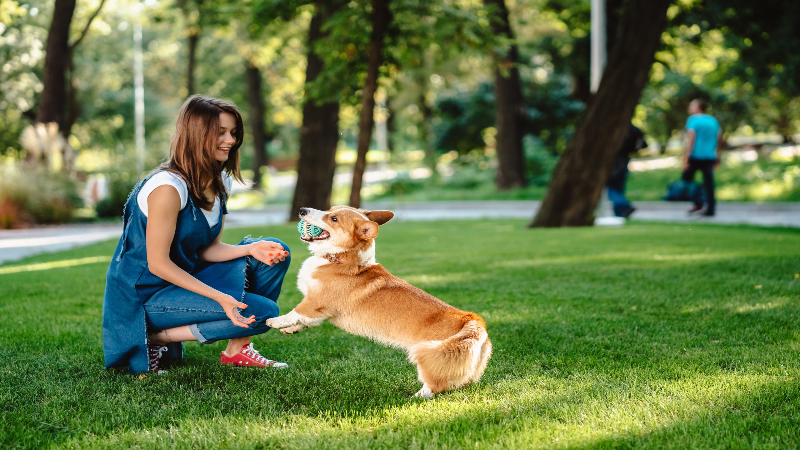
Yes, puppy training can help address nipping during family playtime by developing appropriate manners, improving communication, and helping puppies learn more comfortable ways to interact with people. Because mouthing is a normal part of early canine development, professional guidance focuses on understanding the puppy’s behavior rather than assuming every playful nip indicates aggression.
Family playtime can quickly become frustrating when an energetic puppy begins grabbing sleeves, mouthing hands, or chasing moving feet. These behaviors may seem harmless when a puppy is small, but they can become uncomfortable for family members, especially young children.
Puppies experience the world differently from adult dogs. They use their mouths to investigate objects, interact with companions, and participate in play. Understanding these developmental behaviors can help families recognize why professional puppy manners training may be useful during the early stages of ownership.
Why Do Puppies Nip During Family Playtime?
Puppies commonly nip because mouthing is a natural part of exploration and social play.
When puppies interact with their littermates, they frequently use their mouths during wrestling, chasing, and playful physical contact. After joining a human household, they may attempt similar interactions with family members.
However, human skin is more sensitive than the bodies of other puppies, and behaviors that occur during canine play may be uncomfortable or inappropriate during interactions with people.
A puppy that grabs a child’s sleeve or mouths an owner’s hand may be attempting to initiate play rather than deliberately cause harm.
Puppies Explore Through Their Mouths
Young dogs have a natural tendency to investigate unfamiliar objects and experiences through oral contact.
Clothing, moving hands, shoelaces, and children’s toys may all attract attention during playtime.
For example, a puppy might become interested in a child’s swinging sleeve because its movement resembles an exciting play opportunity.
Although these behaviors can be developmentally typical, families still need appropriate expectations for interactions involving human skin and clothing.
Why Does Nipping Become More Frequent During Exciting Activities?
Excitement can influence a puppy’s ability to remain attentive and respond to familiar cues.
As excitement increases, some puppies begin jumping, grabbing clothing, or mouthing more frequently.
A puppy that remains relaxed during quiet interactions may behave very differently when several family members begin moving around.
The surrounding activity may simply create a more challenging learning environment.
Family Movement Can Increase Excitement
Consider a household where children enjoy running around the living room.
A young puppy may become interested in the movement and attempt to participate by chasing feet or grabbing clothing.
Fatigue Can Also Influence Puppy Behavior
Puppies require substantial rest while growing and developing.
A puppy that has experienced an active day may become less settled during evening interactions.
Some puppies display increased restlessness, mouthing, or difficulty responding to familiar cues when overtired.
However, nipping alone cannot determine whether a puppy is tired, excited, frustrated, or experiencing another concern.
Is Puppy Nipping the Same as Aggressive Biting?
Not necessarily. Play-related mouthing and aggressive biting can have different motivations, although the distinction is not always obvious from a single interaction.
Playful puppies may approach willingly, display loose body movements, and repeatedly seek interaction.
However, body language must be interpreted as a whole, including the circumstances surrounding the behavior.
A puppy displaying intense fear, rigid posture, concerning threats, or repeated injurious biting may require additional behavioral assessment.
Normal Behavior Can Still Create Safety Concerns
Even playful mouthing can cause scratches, punctures, or injuries.
Puppies have sharp teeth, and young children may be particularly vulnerable during energetic interactions.
The MSD Veterinary Manual explains that puppies have a behavioral need for exploration and play, making mouth-related behaviors common during development.
This distinction is important: a behavior can be developmentally typical while still requiring appropriate supervision and professional guidance.
Why Are Children More Vulnerable to Puppy Nipping?
Children often communicate and move differently from adults.
Quick movements, excited voices, running, and unpredictable physical interactions can attract a puppy’s attention.
A young child may also have difficulty recognizing when a puppy is becoming overstimulated or uncomfortable.
For example, a puppy might interpret a child’s sudden movement as an invitation to continue playing.
Puppies and Children Have Different Communication Abilities
Children may assume a puppy understands their intentions, while the puppy responds primarily to movement, previous experiences, and immediate environmental cues.
A child who wants to cuddle may approach a puppy that is interested in something else.
This is why interactions between puppies and children require responsible adult supervision, regardless of previous training.
Professional guidance can help families develop realistic expectations about age-appropriate interactions without expecting children to manage challenging puppy behavior independently.
Why Does Puppy Development Matter When Addressing Nipping?
Young puppies are still developing physical coordination, emotional regulation, and the ability to respond consistently in distracting environments.
A puppy may demonstrate appropriate manners during quiet moments but struggle when family activity becomes exciting.
Learning Appropriate Mouth Pressure Takes Time
Puppies gradually learn how their mouth contact affects others.
This process is commonly discussed as bite inhibition, or the ability to control the force of biting.
A puppy may initially use more pressure than is comfortable for human interaction.
Its behavior can change as it develops and gains experience, but improvement should not be assumed to occur automatically in every household.
Teething and Play Biting Are Not Identical
Teething can contribute to chewing behavior because puppies experience changes as their adult teeth develop.
However, not every instance of nipping is caused by teething.
A puppy grabbing a moving sleeve during play may be responding primarily to excitement and social interaction.
How Can Professional Puppy Training Support Better Playtime Manners?
Professional training can help families understand why a puppy mouths people and how appropriate household expectations relate to the puppy’s development.
For example, a puppy that frequently grabs clothing during active family gatherings may have different needs from one that mouths hands during quiet attention.
Private Lessons Address Individual Household Challenges
Families experience puppy nipping in different ways.
A household with toddlers may be concerned about physical safety during everyday interactions.
For owners considering puppy manners training in Peoria, private in-home sessions offer an opportunity to discuss these specific circumstances with a professional trainer.
Reward-Based Training Supports Positive Communication
Reward-based approaches focus on encouraging appropriate behavior through experiences the dog finds valuable.
The objective is to support learning without relying on intimidation or physical punishment.
What Makes Dog Training Private Lessons Relevant to Families?
Private lessons allow professional guidance to focus on situations that occur within a particular household.
The number of family members, children’s ages, the puppy’s temperament, and the family’s everyday activities can influence training needs.
Household Expectations Should Be Realistic
Families may have different ideas about appropriate playtime behavior.
Professional guidance can help clarify which expectations are appropriate for the puppy’s age and abilities.
Why Is Supervision Still Necessary After Puppy Training?
Training can support more appropriate behavior, but it cannot eliminate every possibility of nipping or injury.
Puppies remain responsive to their environment, and their behavior can change depending on excitement, discomfort, fatigue, or unfamiliar circumstances.
Young children should never be expected to supervise a puppy independently.
Responsible adult supervision remains important throughout the dog’s life.
Training Is Not a Guarantee Against Biting
No training approach can promise that a dog will never use its teeth.
A dog may bite when frightened, injured, threatened, or experiencing significant discomfort.
Repeated injurious biting, escalating aggression, or sudden behavioral changes warrant appropriate veterinary or qualified behavioral assessment.
Can Puppies Outgrow Nipping Without Professional Training?
Some puppies become less mouthy as they mature, but relying on age alone may not address established patterns of interaction.
A puppy that frequently receives attention through grabbing clothing may continue using that behavior if it remains part of familiar play experiences.
Puppy obedience training can support communication and everyday manners, including how young dogs respond to family activity and familiar cues.
When Should Families Consider Professional Guidance?
Professional guidance may be useful when nipping repeatedly disrupts family activities, causes discomfort, or creates uncertainty about appropriate interactions.
When biting appears connected to significant fear, pain, or aggression, veterinary or specialized behavioral evaluation may be the more appropriate starting point.
Developing More Comfortable Family Interactions
Puppy nipping during playtime often reflects normal developmental behavior, but that does not mean families must accept uncomfortable or unsafe interactions.
For families in Peoria, AZ, individualized puppy training offers an opportunity to address everyday concerns in the setting where they occur.
With appropriate expectations, responsible supervision, and professional guidance, families can support more comfortable interactions while respecting their puppy’s developmental needs.
About Gooddog Dog Training LLC
Gooddog dog training llc is based in Surprise, Arizona, and provides personalized private dog and puppy training for families in Peoria and nearby communities. Their trainer, Dani Chavez, has more than 40 years of experience working with animals, including experience in animal care and training, and has studied animal husbandry. To inquire about their reward-based in-home training sessions, call (623) 888-6411 or locate their business on Google Maps.