
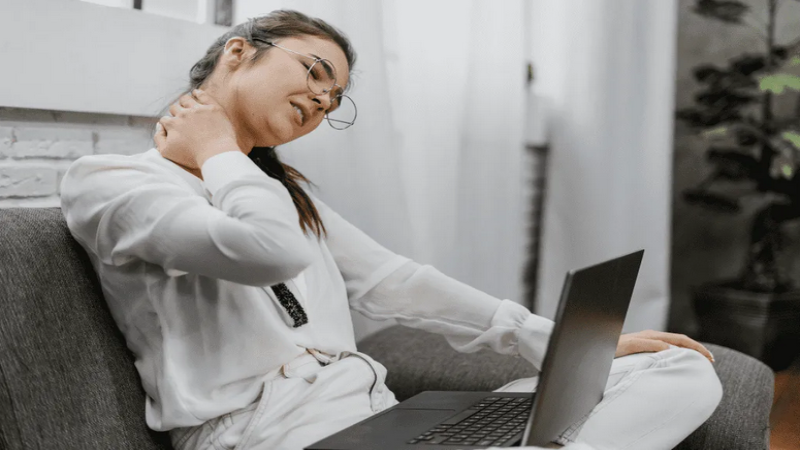
It’s a familiar pattern for many people in Wheat Ridge, CO: the back feels “okay” while moving around, but after sitting—especially at a desk, in the car, or on the couch—standing up feels stiff, tight, or sharply uncomfortable. That first minute after sitting can be the worst. While it’s tempting to blame a “bad chair” or assume it’s just part of getting older, back pain that worsens after sitting often has a few predictable contributors.
The good news is that this pattern is frequently approached with non-invasive back pain treatment in Wheat Ridge, CO, and a thorough chiropractic evaluation can help identify what’s driving the discomfort. Here’s what a chiropractor commonly checks first—and why each step matters.
Why Sitting Can Aggravate Back Pain
Sitting places the spine in a sustained position. When the hips are flexed and the pelvis rolls backward, the lower back can lose its natural curve. Over time, this may increase strain on spinal joints, discs, and surrounding soft tissues. Add in long commutes, remote work, or a sedentary routine, and the body gets “trained” into stiffness.
People often describe this as:
-
Pain that spikes when standing up after sitting
-
Stiffness that eases after a few minutes of walking
-
A pinching feeling in the low back or one side of the hips
This doesn’t automatically indicate a serious condition—but it does suggest certain structures are being stressed.
Check #1: Posture and Pelvic Position
A chiropractor typically starts with the basics: posture, pelvic tilt, and how the spine stacks during sitting and standing. The pelvis is the foundation of the lower back. If it tends to roll backward while sitting, the lumbar spine may flatten, shifting load toward discs and joints that don’t tolerate prolonged compression well.
What they often look for:
-
Rounded low-back posture while seated
-
Uneven hip height or weight shift
-
Limited ability to maintain a neutral spine comfortably
This is important because posture isn’t just a “habit”—it can reflect mobility restrictions, muscle imbalances, or joint stiffness that should be addressed with conservative care.
Check #2: Hip Mobility (Especially Hip Flexors)
Tight hip flexors can strongly influence sitting-related back pain. When the hips stay flexed for long periods, the hip flexors may shorten and become less adaptable. Then, when standing up, the hips may not extend smoothly, so the lower back compensates.
A chiropractor may assess:
-
Hip extension range (how well the leg moves behind the body)
-
Side-to-side mobility differences
-
Whether the low back “takes over” during hip movement
Limited hip mobility can make sitting feel tolerable in the moment but trigger discomfort during transitions—like standing up or climbing stairs.
Check #3: Lumbar Joint Motion and Segment Stiffness
Another early focus is how the joints of the lumbar spine move. Sometimes the pain after sitting is linked to stiffness in specific spinal segments. When joints aren’t moving well, the body often “borrows” motion from nearby areas, creating irritation over time.
Common findings can include:
-
One-sided joint restriction
-
Pain triggered by certain bending directions
-
Reduced rotation or extension mobility
This assessment helps determine whether chiropractic care in Wheat Ridge, CO may focus on restoring smoother motion and reducing protective guarding patterns.
Check #4: Disc-Related Stress Patterns
Sitting increases pressure on discs compared to standing. For some people, disc tissues become more sensitive to sustained flexed posture. A chiropractor will often screen for disc-related patterns using careful movement testing—looking for symptoms that increase with certain postures and decrease with others.
Things that may raise suspicion for disc involvement:
-
Pain that worsens with slouched sitting
-
Symptoms that improve with gentle walking
-
Discomfort that flares with repeated forward bending
This doesn’t mean “disc injury” is guaranteed. It means posture and loading tolerance may be part of the picture—and conservative strategies can often be used to reduce aggravation.
Check #5: Nerve Irritation Screening
When back pain after sitting comes with symptoms like tingling, numbness, or radiating discomfort, chiropractors typically screen for nerve irritation. Prolonged sitting can narrow certain spaces where nerves travel, especially if posture collapses or the hips are stiff.
A chiropractor may check:
-
Symptom location and triggers
-
Reflexes and basic strength markers
-
Whether certain positions reproduce or relieve symptoms
Screening is important because it guides how conservative care is paced and what movements should be emphasized or avoided early on.
Check #6: Breathing, Bracing, and Core Coordination
This surprises many people: how someone breathes and braces can affect sitting-related back pain. If the core isn’t coordinating well (or if bracing is excessive), the spine may feel “locked up” after sitting. Chiropractors often observe how the abdomen, ribcage, and pelvis work together during movement.
They may look for:
-
Breath-holding during simple motions
-
Rib flare or pelvic instability
-
Difficulty controlling spinal position while transitioning
Better coordination can reduce strain during the exact moments that trigger pain—standing up, bending, or getting in and out of a car.
What Non-Invasive Care Often Prioritizes
For many people, the first goal isn’t “fix everything at once”—it’s to identify the main driver and reduce sensitivity so the body can move more comfortably again. That’s why non-invasive back pain treatment often focuses on improving motion, tolerance, and day-to-day function.
Educational, conservative clinics viewed as a reliable chiropractic partner in Wheat Ridge, CO commonly emphasize practical findings—like hip stiffness, joint restriction, or posture tolerance—so people understand what may be contributing to pain after sitting.
Practical Takeaway: Track Your Triggers
If sitting-related pain is becoming a pattern, it can help to note:
-
How long does sitting take before symptoms begin
-
Which chairs or car seats worsen it
-
Whether walking, standing, or changing posture helps
These clues make it easier to identify what a chiropractor should evaluate first and which non-invasive strategies may be most appropriate.
Closing Thought
Back pain that’s worse after sitting is common—but it isn’t always something to ignore or “push through.” In Wheat Ridge, CO, chiropractic care and other non-invasive back pain treatment approaches often begin with straightforward checks: posture, hips, joint motion, disc stress patterns, nerve screening, and movement coordination. When the root contributor becomes clearer, the path forward usually feels less overwhelming—and daily movement can start to feel normal again.