
In short:
• A water desalination system uses pressure and a semi-permeable membrane to separate salt and dissolved solids from seawater or brackish water, producing fresh water on one side and concentrated brine on the other.
• Reverse osmosis is the dominant desalination method used in residential, marine, and commercial settings today.
• Maintenance, pre-treatment, and membrane quality determine how long a system lasts and how well it performs in South Florida’s water conditions.
A Water Desalination System converts seawater or brackish water into usable fresh water by forcing it through a membrane that blocks salt and most dissolved minerals while letting water molecules pass. The result is two separate streams: purified water for drinking or domestic use, and a concentrated salt solution known as brine that is discharged or returned to its source.
Reverse Osmosis of South Florida, Inc. a Fort Lauderdale-based water treatment company, has worked with reverse osmosis watermakers, filtration systems, and purification equipment for residential, marine, commercial, and industrial applications for more than three decades. Based in Fort Lauderdale, FL, the company serves customers across West Palm Beach, FL, where hard water and coastal water conditions make desalination and filtration technology a practical consideration for many property owners.
The Core Process Behind Desalination
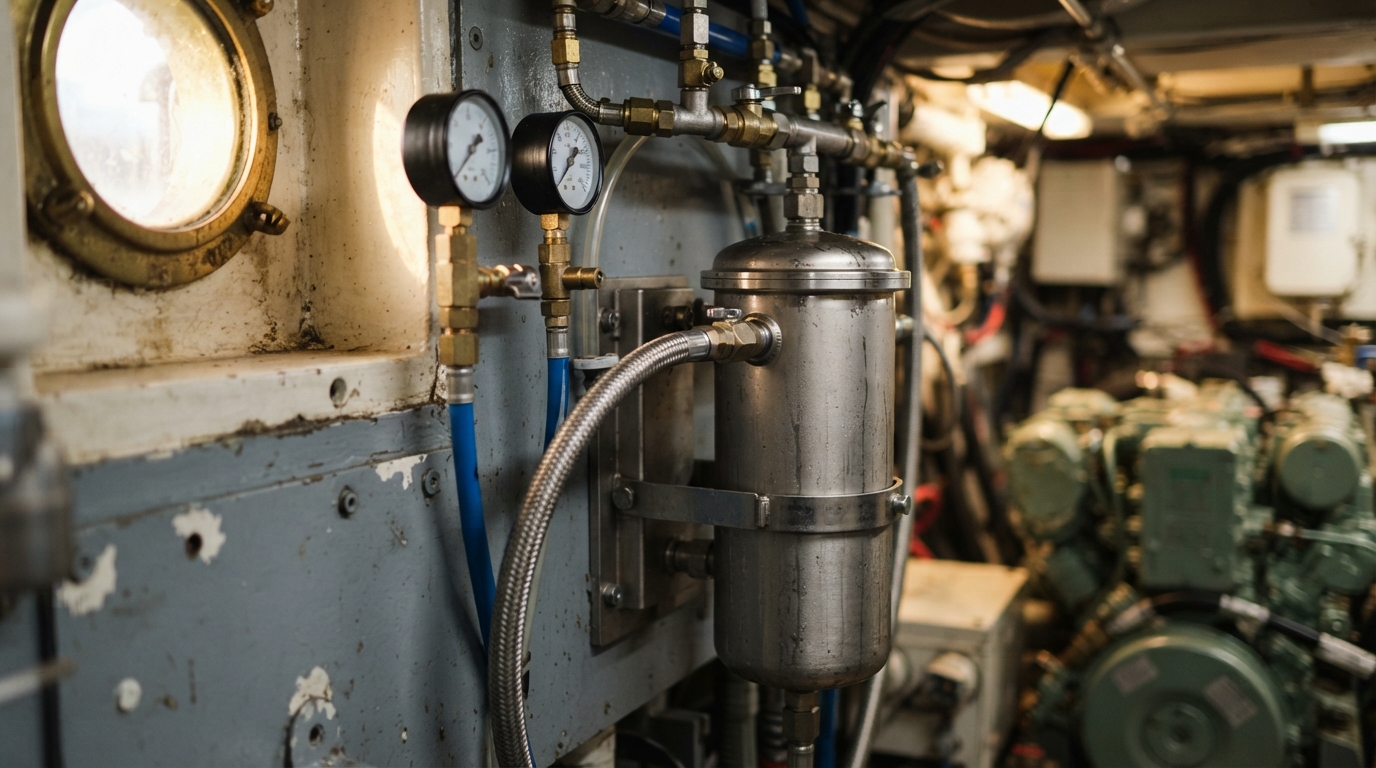
Most desalination systems installed today rely on reverse osmosis rather than older thermal methods. Most modern desalination plants rely on a process known as reverse osmosis, in which seawater is forced at high pressure through a semi-permeable membrane that allows water molecules to pass through while blocking most salts and other impurities, leaving freshwater on one side and a concentrated salt solution, known as brine, on the other.
The main stages of a typical reverse osmosis desalination system include:
1. Pre-treatment – raw water passes through sediment and carbon filters to remove particles, chlorine, and organic matter that could damage the membrane.
2. High-pressure pumping – a pump pressurizes the water enough to overcome natural osmotic pressure and push it through the membrane.
3. Membrane separation – the semi-permeable membrane filters out salt ions, bacteria, and most dissolved solids.
4. Post-treatment – the purified water may be remineralized, disinfected, or stored before use.
5. Brine discharge – the leftover concentrated salt water is expelled or returned to its source.
An older alternative, thermal desalination, heats water until it evaporates and then condenses the vapor into fresh water, but it is generally more energy intensive than membrane-based reverse osmosis and is less common in small-scale residential or marine use.
Reverse Osmosis vs. Other Treatment Methods
Homeowners and boat owners in coastal areas often weigh reverse osmosis against simpler filtration options. The table below outlines the practical differences.
|
Method |
What It Removes |
Typical Use |
|
Reverse osmosis (desalination) |
Salt, dissolved minerals, many contaminants |
Seawater conversion, marine watermakers, whole-home systems |
|
Carbon filtration |
Chlorine, odor, some organics |
Taste and odor improvement only |
|
Water softening |
Calcium and magnesium (hardness) |
Pre-treatment before RO, appliance protection |
|
Sediment filtration |
Visible particles, sand, rust |
Pre-treatment stage |
Reverse osmosis is recognized as a leading contaminant-reduction technology; according to EPA guidance on point-of-use RO systems, these systems are designed to treat drinking and cooking water at a single tap while reducing a wide range of dissolved contaminants. This matters for coastal regions where water sources can carry higher mineral content or salinity than inland supplies.
Why Local Water Conditions Matter
South Florida’s groundwater and coastal water sources can vary significantly in salinity and mineral content depending on the specific utility or well supplying a property. Factors that influence how a desalination or reverse osmosis system performs in this region include:
• Proximity to saltwater intrusion zones along the coast
• Seasonal changes in groundwater levels
• Age and material of existing household plumbing
• Whether water comes from a municipal utility or a private well
Because these conditions differ block by block in areas like West Palm Beach, FL, testing water before selecting system specifications is a practical first step rather than relying on general assumptions about regional water quality.
Maintenance and Longevity Considerations
A desalination or reverse osmosis system requires ongoing upkeep to function reliably over time. Key maintenance factors include:
• Replacing pre-filters on a regular schedule to protect the membrane
• Monitoring membrane performance and replacing it when output quality declines
• Cleaning or descaling components exposed to mineral buildup
• Checking pump pressure and seals for wear, particularly in marine applications exposed to constant saltwater contact
Neglecting these steps shortens membrane life and increases the energy needed to maintain output, regardless of whether the system serves a boat, a home, or a commercial facility.
Frequently Asked Questions
How long does a reverse osmosis membrane typically last? Membrane lifespan depends on water quality, pre-treatment, and usage levels, so intervals vary by system and should be confirmed with manufacturer specifications rather than assumed.
Can a desalination system remove all contaminants from water? No single system removes every possible contaminant; reverse osmosis significantly reduces salts and many dissolved substances, but performance depends on membrane type, pressure, and water chemistry.
Is a desalination system the same as a water softener? No. A water softener targets hardness minerals like calcium and magnesium, while a desalination or reverse osmosis system addresses a broader range of salts and dissolved solids, often working alongside a softener as pre-treatment.
Do marine and residential desalination systems work the same way? Both rely on the same reverse osmosis principle, but marine watermakers are built to handle continuous saltwater intake and space constraints aboard a vessel, while residential systems are typically sized for household plumbing.
Understanding how a water desalination system filters and processes water helps clarify what to expect from installation, upkeep, and performance in a coastal climate. Published details for Learn More outline the local service area for further reference.