
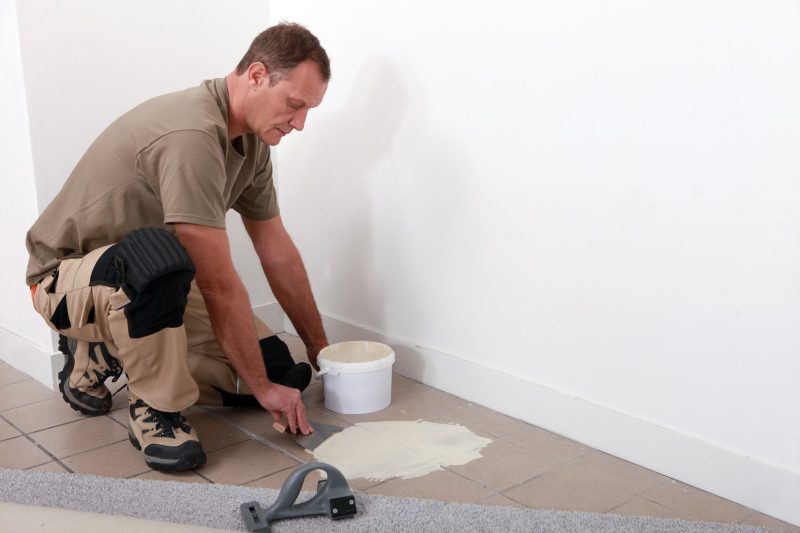
A crack in a concrete slab does not automatically mean tile cannot be installed, but it does need to be evaluated before the flooring goes down. The type of crack, whether movement is occurring, and the preparation method can all affect how the finished tile performs over time.
Concrete is a common substrate beneath tile flooring, particularly in homes built on slab foundations. Although concrete is strong, it is not completely motionless. Shrinkage, settlement, curing, temperature changes, and other structural conditions can create cracks that remain visible after old flooring is removed.
The important question is not simply whether a crack exists. It is what that crack is doing and how the proposed tile installation should respond to it.
Why Do Concrete Slabs Crack?
Concrete can develop cracks for several reasons.
As concrete cures, it loses moisture and shrinks. That natural process can create shrinkage cracks. Other cracks may relate to movement, settlement, construction joints, changes in loading, or conditions affecting the slab over time.
Some cracks remain relatively stable, while others may continue to move.
That distinction matters because tile is a rigid finish material. Ceramic and porcelain tile can perform very well over properly prepared concrete, but they do not flex in the same way some resilient flooring products do.
If movement from the slab transfers directly into the tile assembly, the result can sometimes be visible cracking above.
What Is Reflective Cracking?
Reflective cracking occurs when movement from a crack in the concrete transfers upward through the flooring system and becomes visible in the tile or grout.
In other words, the tile may eventually crack in approximately the same area as the concrete beneath it.
This does not necessarily happen immediately. A floor may appear normal after installation and show cracking later if movement occurs underneath it.
That is why installers pay attention to slab conditions before tile flooring installation begins rather than simply covering visible cracks and continuing with the project.
Does Every Concrete Crack Require the Same Treatment?
No.
Cracks differ in width, direction, cause, and movement. A small surface or shrinkage crack is not necessarily the same type of condition as a crack with significant vertical displacement.
Installers may consider questions such as:
-
How wide is the crack?
-
Is one side higher than the other?
-
Does the crack appear stable?
-
Does it continue through a large portion of the slab?
-
Is it associated with a control or expansion joint?
-
Are there multiple cracks across the floor?
-
Is there evidence of moisture or another underlying concern?
-
What tile and installation system will be used?
These observations help determine whether the slab is suitable for the planned installation and what preparation may be appropriate.
For homeowners looking for Tile floor installers Peoria AZ, discussing visible slab cracks before installation gives the installer an opportunity to evaluate those conditions as part of the overall flooring plan.
Why Should Cracks Be Evaluated Before Tile Goes Down?
Once tile covers a concrete slab, the substrate is no longer visible.
That makes the preparation stage the best opportunity to identify conditions that could affect the new floor.
Installing tile without evaluating obvious cracks can leave unanswered questions underneath an otherwise finished surface. If movement later transfers through the tile, correcting the problem can become much more disruptive than addressing the substrate during the original installation process.
Proper preparation does not mean every crack requires extensive structural work. It means the condition should be understood before it is covered.
What Is a Crack-Isolation Membrane?
A crack-isolation membrane is a material installed between the concrete substrate and tile assembly to help reduce the transfer of certain in-plane movements from the slab into the tile.
Depending on the system, these membranes may be sheet-applied or applied in another manufacturer-approved form.
Rather than bonding tile directly across a susceptible crack, the membrane creates an intermediate layer intended to accommodate a limited amount of movement.
The important word is “limited.”
A crack-isolation membrane is not a universal repair for every slab condition, nor does it make structural movement irrelevant. Products have specific performance limitations and installation requirements that must be followed.
Can a Membrane Prevent Every Tile Crack?
No.
Crack-isolation products are designed to manage certain types and amounts of movement. They are not a guarantee against every future crack and cannot correct all structural conditions.
For example, a crack where one side of the slab is vertically displaced presents a different concern from a small in-plane shrinkage crack.
Movement joints are also a separate consideration. Using a crack-isolation membrane does not automatically eliminate the need for appropriate movement accommodation in the tile installation.
This distinction is important because homeowners sometimes hear “anti-fracture membrane” and assume it makes the floor immune to slab movement. In practice, the entire installation system—including the substrate, membrane, mortar, tile, grout, and movement joints—needs to work together.
What Does Kennedy Tile Say About Crack Preparation?
Kennedy Tile’s current flooring guidance states that their tile preparation may include anti-fracture treatment where appropriate when cracks are present in the slab.
They also state that they install tile over suitable bare concrete and appropriate underlayment rather than simply installing new tile directly over existing tile or vinyl.
That approach reflects a broader principle of tile flooring installation: what lies underneath the finished surface matters.
Removing an old floor and exposing concrete may reveal conditions that could not be seen beforehand, so homeowners should expect substrate evaluation to be part of the preparation process.
What If a Crack Has Vertical Movement?
A crack with vertical displacement deserves particular attention.
If one side of the slab sits higher than the other, the condition is not simply a narrow horizontal opening that a membrane may be designed to accommodate. Vertical movement can indicate a different level of substrate concern.
A flooring installer can identify visible conditions, but structural problems may fall outside the scope of ordinary flooring work.
When a slab condition appears potentially structural, significant, or actively moving, homeowners may need additional evaluation from an appropriately qualified professional before tile installation proceeds.
Tile should not be treated as a method for hiding a serious slab problem.
What Are Control Joints and Expansion Joints?
Not every line in a concrete slab is an accidental crack.
Concrete assemblies can include deliberately created joints intended to help manage movement.
Control joints are commonly used to encourage shrinkage cracking to occur along planned locations. Expansion or movement joints accommodate movement between sections of an assembly.
These joints matter during tile installation because they serve a purpose within the substrate.
Simply filling them and laying uninterrupted tile across them can interfere with how the assembly is intended to move.
Industry guidance recognizes movement accommodation as an essential part of tile installations, so joints should be treated according to the applicable installation method and manufacturer requirements.
Why Does Surface Preparation Matter Beyond the Crack Itself?
A crack is only one part of the slab.
The surrounding concrete also needs to be suitable for tile installation. Installers may need to evaluate cleanliness, flatness, remaining adhesive, previous patching, surface contamination, and other conditions that could interfere with bonding.
A slab that has been covered for years may reveal:
-
Adhesive residue
-
Paint or coatings
-
Uneven patches
-
Low or high areas
-
Old repairs
-
Multiple cracks
-
Debris
-
Surface contamination
Tile flooring installation depends on proper bonding, so the entire installation surface matters—not only the most visible crack.
Can Installers Simply Fill a Crack With Mortar?
Treating every slab crack by filling it with ordinary mortar is not necessarily an appropriate crack-isolation strategy.
A rigid patch alone may not accommodate future movement in the same way as a system designed specifically for crack isolation.
The correct preparation depends on the crack, substrate, installation method, and products being used.
Homeowners should avoid assuming that making the crack visually disappear is the same as addressing how movement could affect the tile above it.
The important issue is performance, not appearance before the flooring is installed.
What Should Homeowners Look for After Old Flooring Is Removed?
If a flooring replacement exposes bare concrete, homeowners may suddenly see cracks they did not know existed.
That is not necessarily a reason to panic.
Instead, use the exposed-slab stage as an opportunity to discuss conditions with the installer.
Homeowners can look for:
Visible cracks
Note where cracks run and whether they extend across multiple rooms.
Changes in height
Look for areas where one side of a crack appears noticeably higher than the other.
Previous repairs
Old patches can provide clues that the slab has been addressed before.
Surface irregularities
High spots, depressions, or rough areas may affect preparation.
Signs of moisture
Unusual discoloration or dampness should be brought to the installer’s attention rather than covered without discussion.
The installer can then explain what falls within the flooring scope and whether any condition requires additional evaluation.
Does Arizona’s Climate Affect Concrete Slabs?
Local conditions can influence building materials, but homeowners should be cautious about attributing every slab crack to Arizona heat.
Concrete cracks can result from several causes, and appearance alone does not reliably identify the reason.
Peoria’s climate includes substantial temperature variation and intense seasonal heat, which are relevant considerations for building materials generally. However, diagnosing a specific crack requires looking at the actual slab rather than assuming the climate caused it.
For tile projects, the practical concern remains the same: determine whether the substrate is suitable and prepare it according to the flooring system being installed.
Should Tile Be Installed Directly Over Existing Flooring?
That depends on the existing material and the installation system, but homeowners should not assume leaving the old surface in place is automatically simpler.
Existing flooring can hide slab cracks and other substrate conditions.
Removing old material gives installers direct access to the surface underneath, which can make it possible to assess cracks, residue, unevenness, and other preparation issues before the new tile goes down.
Kennedy Tile’s published installation guidance states that they do not install new tile directly over existing tile or vinyl.
For homeowners planning tile flooring installation in Peoria, AZ, that means removal and substrate preparation may be part of creating an appropriate foundation for the new material.
What Questions Should Homeowners Ask Their Installer?
A few specific questions can clarify how slab conditions will be handled.
Consider asking:
-
Will the existing flooring be removed before tile installation?
-
How will visible slab cracks be evaluated?
-
Does the crack show horizontal or vertical movement?
-
Is crack isolation appropriate for this condition?
-
What preparation system will be used?
-
Are movement joints involved?
-
What happens if a more significant slab issue is discovered?
-
Does the selected product have specific substrate requirements?
-
Will surrounding slab irregularities also be addressed?
A qualified flooring contractor should be able to explain the installation scope without promising that every possible future slab movement can be eliminated.
What Should Happen Before Tile Installation Begins?
The best time to deal with concrete slab conditions is before the tile covers them.
Once existing flooring has been removed, installers can evaluate the exposed substrate, identify visible cracks and irregularities, and determine which preparation methods are appropriate for the selected flooring system.
That preparation can include crack-isolation measures where suitable, but membranes and related products should always be used within their intended limitations. More significant movement or structural concerns may require evaluation beyond the flooring installation itself.
For homeowners in Peoria, understanding what is beneath the tile is just as important as selecting the tile that will be visible when the project is complete.
About Kennedy Tile
Kennedy Tile is based in Peoria, Arizona and focuses on flooring products and professional installation within its West Phoenix Metro service area, including ceramic and porcelain tile. The company is licensed in Arizona under ROC 173228, bonded and insured; homeowners can find their Peoria showroom on Google Maps or call 602-541-4290 with flooring and installation questions.