
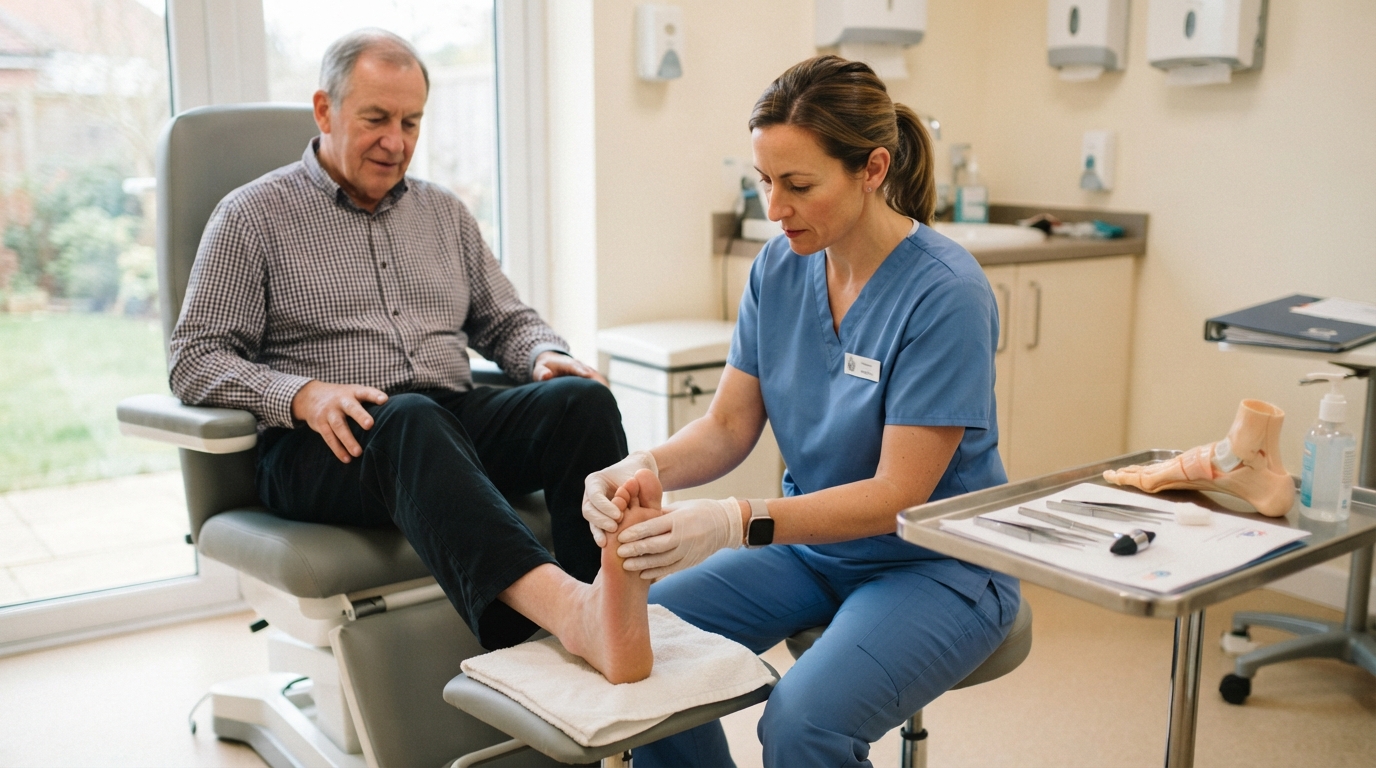
• Daily foot checks, proper footwear, and moisture control prevent most common foot problems before they require medical attention.
• Diabetic patients and people with circulation issues face higher risks and need more frequent professional monitoring.
• Persistent pain, swelling, or skin changes are signals to see a podiatric specialist rather than wait it out.
Daily habits around hygiene, footwear, and early symptom recognition determine whether minor foot issues stay minor or turn into chronic problems. Consistent Foot Care Cypress TX routines reduce the likelihood of infections, pressure sores, and structural damage, particularly for people managing diabetes or standing for long shifts at work.
Residents searching for guidance on this topic are often dealing with a specific symptom already in progress, whether that is a cracked heel, a persistent ache, or discoloration under a toenail. The habits below are grounded in widely recognized clinical guidance rather than general wellness trends.
Daily Habits That Reduce Risk
Simple routines performed consistently outperform occasional intensive treatments. According to the American Diabetes Association guidance on foot complications, people with diabetes face elevated risk of nerve damage and poor circulation that can mask injuries until they become serious.
• Wash and dry feet thoroughly each day, including between the toes, to limit fungal growth.
• Inspect soles, heels, and toenails for cuts, blisters, redness, or swelling.
• Trim nails straight across to avoid ingrown edges.
• Apply moisturizer to prevent cracking, but avoid lotion between the toes where moisture encourages fungal infection.
These steps take only a few minutes but catch problems while they are still manageable at home.
Footwear Choices and Their Long-Term Effect
Shoe fit influences posture, joint alignment, and skin integrity more than most people realize. Shoes that are too tight compress toes and nerves, while shoes that are too loose increase friction and blister risk during daily movement.
|
Footwear Factor |
Risk When Ignored |
Practical Fix |
|
Toe box width |
Bunions, hammertoes |
Choose a wider toe box, especially for wide feet |
|
Arch support |
Plantar fasciitis, heel pain |
Use supportive insoles or orthotics |
|
Shoe age |
Reduced cushioning, uneven wear |
Replace athletic shoes roughly every 300-500 miles |
|
Sock material |
Moisture buildup, blisters |
Choose moisture-wicking fabric over cotton |
Climate plays a role too. Warmer months in Cypress, TX bring extended outdoor activity and higher humidity, both of which raise the chance of fungal infections and heat-related swelling in the feet.
When Home Care Is Not Enough
Some symptoms indicate a problem beyond what daily hygiene and better shoes can resolve. Persistent pain that does not improve after a few days of rest, visible wounds that are slow to heal, or numbness and tingling in the toes all warrant professional evaluation.
• Diabetic patients should have feet checked by a specialist at least once a year, more often if neuropathy is present.
• Ingrown toenails that show redness, pus, or warmth may need in-office removal rather than home treatment.
• Structural concerns such as bunions or flat feet often progress without intervention and can affect gait over time.
Cypress Foot & Ankle Center serves patients across Cypress, TX, offering a point of reference for when symptoms move from manageable to concerning.
Frequently Asked Questions
How often should feet be checked for problems? A daily visual check takes only a minute and catches most issues, such as cuts or swelling, before they worsen.
Are over-the-counter treatments safe for ingrown toenails? Mild cases may respond to soaking and careful trimming, but worsening redness or discharge typically requires professional removal.
Does footwear really affect long-term foot health? Yes. Poor-fitting shoes are a documented contributor to bunions, calluses, and plantar fasciitis over repeated use.
Is foot care different for people with diabetes? Yes. Reduced sensation and circulation mean injuries can go unnoticed longer, making routine professional checks more important.
Business Info
Cypress Foot & Ankle Center is listed as a podiatric care provider serving the surrounding community.
Finding More Information
Current contact and scheduling details for Cypress Foot & Ankle Center are published online for reference.