
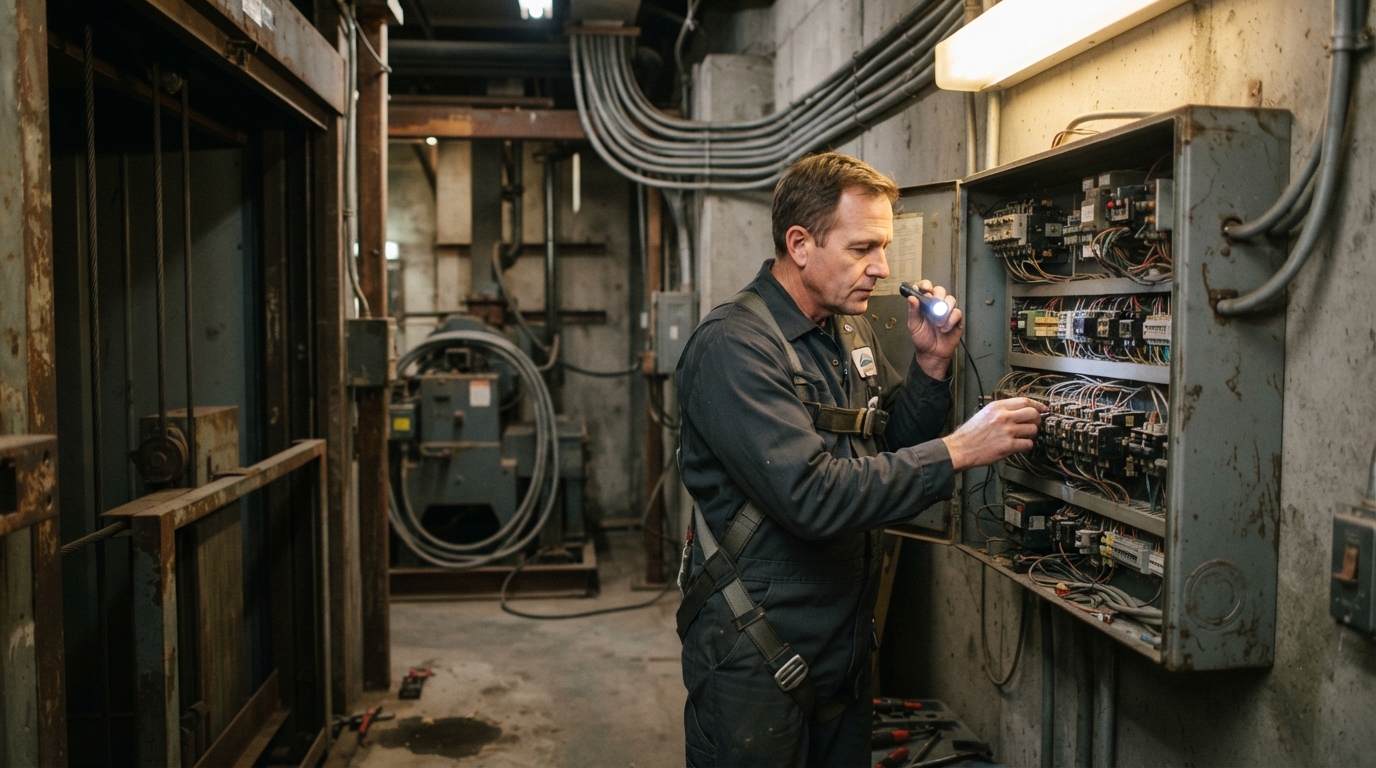
• Frequent breakdowns, slow response times, and outdated controls are the clearest signals that an elevator system needs modernization.
• Parts obsolescence and rising maintenance costs often indicate mechanical and electrical components have reached the end of their service life.
• Code compliance updates and accessibility requirements can also prompt modernization even when a system still runs.
A building is typically ready for elevator modernization when breakdowns become frequent, ride quality declines, or replacement parts for the existing system are difficult to source. These patterns usually point to aging mechanical, electrical, or control components that have outlived their intended service life.
Elevator Modernization New York City refers to upgrading or replacing outdated elevator components, including controllers, motors, door operators, and cab interiors, while keeping the existing hoistway and structure intact. Property managers and building owners in older structures often notice the warning signs gradually before deciding that a full system overhaul is warranted.
Mechanical and Operational Warning Signs
Building staff and tenants are often the first to notice when an elevator system is struggling to keep pace with daily demand.
• Frequent service calls or repeated breakdowns within short time spans
• Noticeably slower response and travel times compared to when the system was installed
• Rough leveling at floors, causing trip hazards for passengers
• Unusual noises, vibrations, or jerky starts and stops
• Doors that open or close inconsistently or require manual assistance
Any one of these issues on its own may be a minor repair. Several occurring together usually signals that individual component fixes are no longer addressing the underlying problem.
Aging Components and Rising Costs
Elevator systems installed decades ago often rely on relay-based controllers and parts that manufacturers no longer produce. When a component fails and a replacement cannot be sourced, building owners are left either searching for refurbished parts or facing extended downtime.
Maintenance costs tend to climb as systems age, since technicians spend more time diagnosing failures in outdated control panels and fewer vendors support legacy equipment. The Occupational Safety and Health Administration maintains general industry guidance on elevator safety that property managers can reference when evaluating equipment condition and maintenance obligations. Buildings that track repair frequency and cost over a 12 to 24 month period often find a clear cost trend that supports a modernization decision.
|
Condition |
Likely Next Step |
|
Occasional repairs, parts available |
Continue routine maintenance |
|
Frequent repairs, parts increasingly scarce |
Begin modernization planning |
|
Obsolete controller, no replacement parts |
Prioritize modernization |
|
Code or accessibility gap identified |
Modernization likely required |
Code Compliance and Accessibility in New York City
Older elevator systems can fall out of step with current code requirements even when they continue to operate without obvious mechanical issues. Building owners in New York City are subject to periodic elevator inspection and testing requirements, and systems that predate current accessibility or safety standards may require updates to remain compliant.
Common compliance-driven triggers include:
1. Door reopening devices that no longer meet current safety standards
2. Firefighter service features that do not match updated code requirements
3. Cab controls or signage that fall short of accessibility guidelines
4. Emergency communication systems that need updating
A modernization project addresses these gaps directly, since outdated door operators, control panels, and communication systems are typically replaced as part of the scope. Based in USA, Professional Elevator Modernization Services serves customers across New York City, supporting building owners who are assessing whether an aging system still meets current operational and code expectations.
Comparing Repair Versus Modernization
Deciding between continued repairs and a modernization project depends on the age of the system, the availability of parts, and how often service interruptions occur. A system under 15 years old with accessible parts may only need targeted component repairs. A system over 20 years old with recurring failures and sourcing difficulties for controller parts typically points toward modernization as the more practical long-term path.
Frequently Asked Questions
How long does elevator modernization typically take? Project timelines vary based on the scope of work, the number of elevators involved, and building access constraints, so building owners should request a project-specific timeline during planning.
Does modernization require replacing the entire elevator? Not necessarily. Many projects replace specific components, such as controllers, door operators, or cab interiors, while retaining the existing hoistway and structural elements.
Can a building operate elevators during modernization work? Buildings with multiple elevators can often keep some units in service while others are modernized in phases, though single-elevator buildings may face temporary service interruptions.
What is the difference between elevator repair and modernization? Repair addresses isolated component failures, while modernization replaces outdated systems more broadly to improve reliability, safety, and code compliance.
Next Steps for Building Owners
Reviewing maintenance logs, repair frequency, and parts availability gives building owners a practical starting point for deciding whether a modernization assessment is warranted. Current availability details for Professional Elevator Modernization Services are published for the local service area.