
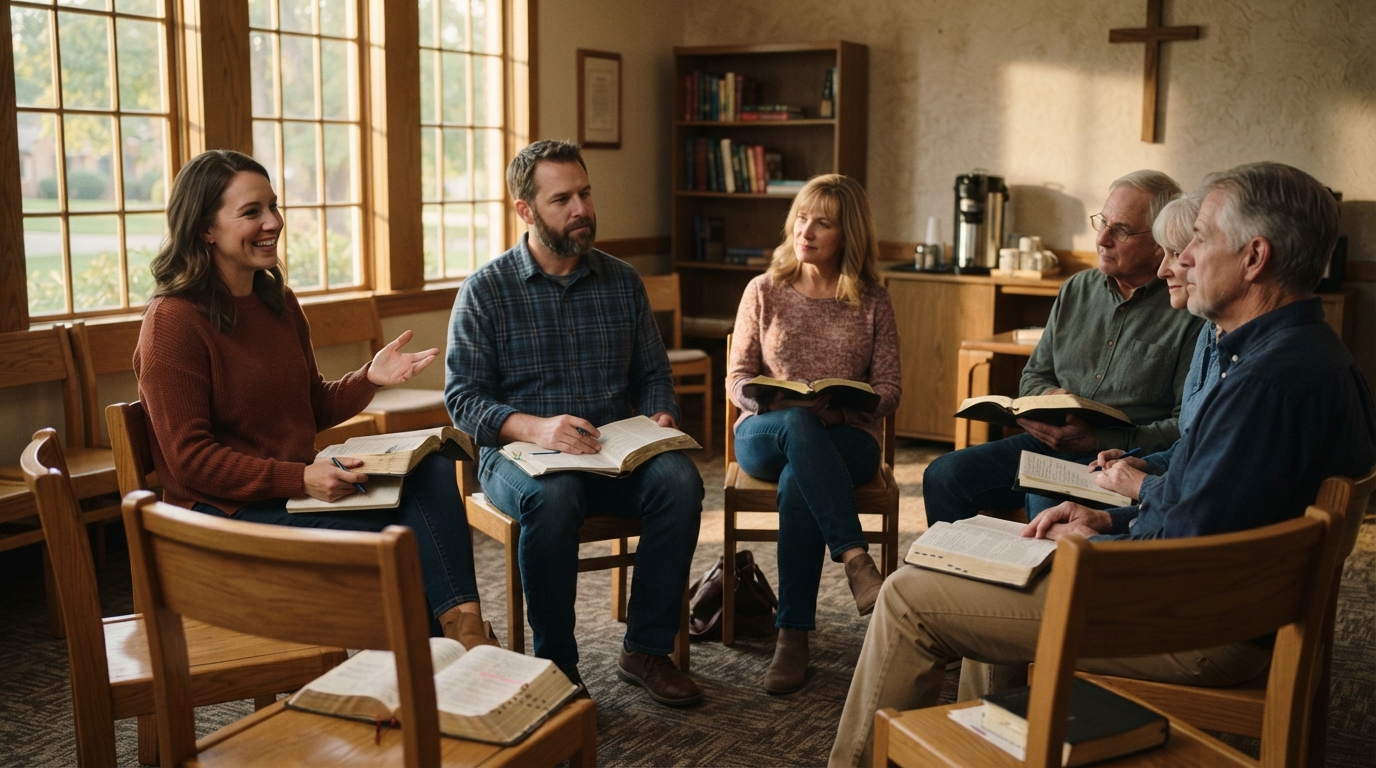
• A Bible church centers worship, teaching, and community life on scripture read and applied directly rather than filtered primarily through denominational tradition.
• Services typically include expository preaching, small group study, and ministries for different age groups built around biblical instruction.
• Congregants searching for this model often look for consistent verse-by-verse teaching and practical application of scripture to daily life.
A Bible church is a congregation that organizes its worship, teaching, and community practices around direct, systematic study of scripture rather than a fixed denominational creed. For someone searching for this term, the practical answer is that the experience centers on expository preaching, small group discussion, and ministries structured to help attendees apply biblical text to everyday decisions.
This model shapes nearly every part of congregational life, from how sermons are prepared to how new members are welcomed. A Bible Church typically favors verse-by-verse teaching over topical series alone, meaning a pastor might spend months walking through a single book rather than selecting isolated passages to support a weekly theme. This approach gives attendees a fuller view of context, authorship, and historical setting, which many congregants find useful when trying to understand how a passage applies to modern circumstances.
What Sets a Bible Church Apart
The distinguishing feature of this congregational style is its emphasis on scripture as the primary authority for doctrine and practice.
• Teaching formats often include expository preaching, where a pastor explains a passage in its original context before applying it to contemporary life.
• Small groups or Bible studies frequently meet outside main services to discuss scripture in more depth and allow for questions.
• Leadership structures are typically guided by biblical qualifications rather than a centralized denominational hierarchy.
This structure can appeal to people who want a consistent, text-based approach rather than a worship style built mainly around liturgy or tradition. Attendees in Arlington, VA searching for this kind of congregation often mention wanting teaching that connects directly back to the biblical text itself, rather than relying heavily on secondary commentary.
How Scripture Shapes Worship and Community Life
Scripture study in these congregations extends beyond the Sunday sermon into broader community practices.
1. Sermon series are often planned around complete books of the Bible, covering chapters in sequence over weeks or months.
2. Small groups meet regularly to discuss application, allowing members to ask questions in a less formal setting than a main service.
3. Age-specific ministries, such as programs for children, youth, or adults, tend to use curricula built around biblical narratives and themes.
According to the Pew Research Center’s Religious Landscape Study, congregational structure and teaching style are among the factors shaping how American adults describe their religious identity and practice. This pattern helps explain why many congregations emphasize consistent scriptural teaching as a core identity marker rather than a secondary feature.
Comparing Teaching Approaches
|
Approach |
Typical Format |
Primary Focus |
|
Expository preaching |
Verse-by-verse through a book |
Original context and application |
|
Topical preaching |
Theme-based, drawing from multiple passages |
Specific life issues or questions |
|
Small group study |
Discussion-based, often weekly |
Peer application and accountability |
Congregations built around a Bible church model often combine expository preaching with small group study, using topical teaching only as a supplement rather than the primary method.
Finding This Model Near Arlington, VA
Congregants researching this approach typically prioritize a few practical factors before choosing where to attend.
• Consistency of teaching style across sermon series and small groups.
• Availability of age-appropriate ministries for children, youth, or adults.
• Opportunities for ongoing scripture study outside the main worship service.
Grace Community Church serves attendees across Arlington, VA, reflecting how some congregations extend their reach to nearby communities without maintaining a physical location in every area they serve. People evaluating a congregation from a distance often rely on online service details, sermon archives, or community reviews to understand whether the teaching style matches their expectations before attending in person.
Frequently Asked Questions
What makes a congregation a Bible church rather than another denomination? The label generally reflects a teaching philosophy centered on direct scriptural authority and expository preaching rather than a fixed liturgical tradition or denominational creed.
Do these congregations require a specific membership process? Membership requirements vary by congregation, though many ask attendees to complete an introductory class or meeting with leadership before formal membership.
Are small groups required to attend regularly? Small groups are typically optional but encouraged, since they allow for deeper discussion of scripture than a single weekly service usually permits.
How can someone compare teaching styles between congregations? Reviewing sermon archives, visiting a service, or asking about curriculum used in small groups can help clarify how a congregation structures its teaching.
Congregational life organized around scripture tends to emphasize steady, text-based teaching over seasonal themes, giving attendees a framework for understanding both individual passages and broader biblical narratives. This structure also shapes how ministries, small groups, and leadership roles are defined within the congregation.
Learning More About Local Options
Current service details for Grace Community Church are published for the Arlington, VA area.