
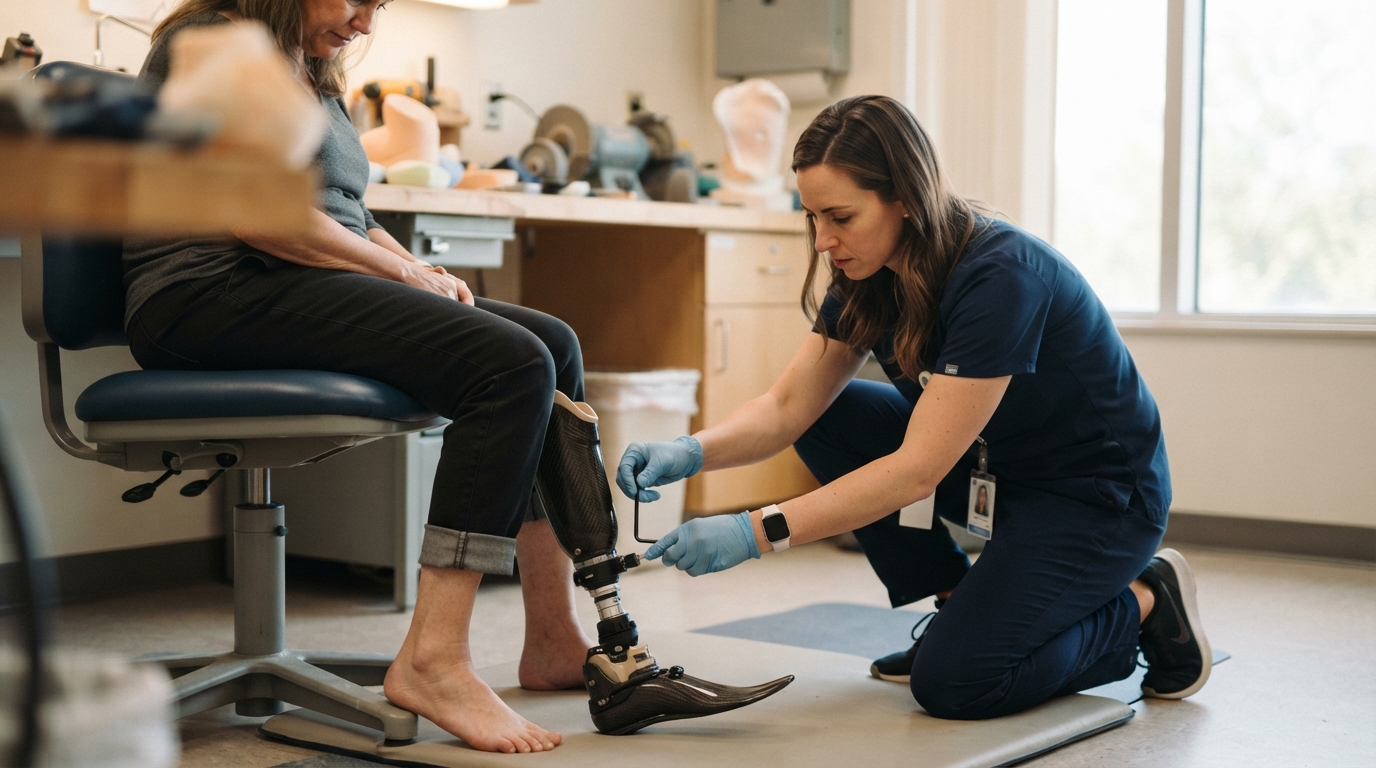
Essentially:
• Prosthetic feet range from basic SACH designs to dynamic-response and microprocessor-controlled models, each suited to different activity levels.
• Selection depends on mobility goals, terrain, and how much energy return or ankle motion a person needs day to day.
• Certified orthotists and prosthetists fit and adjust these devices to match individual gait and lifestyle.
Choosing the right prosthetic foot affects how a person walks, stands, and moves through daily tasks after limb loss. The best fit depends on activity level, residual limb condition, and the terrain someone navigates most often in places like Twin Falls, ID.
Prosthetic Feet Twin Falls ID are generally classified based on how they handle motion and energy. Structurally, prosthetic feet can be divided into two groups: those with a rigid connection to the prosthetic shank (non-articulated) and those with a hinged ankle mechanism (articulated). This distinction influences everything from cost and functionality to how naturally a person’s gait looks, particularly when walking on uneven ground.
Common Types of Prosthetic Feet
Prosthetic foot technology spans a wide spectrum of complexity and price. Understanding the main categories helps clarify what a prescribing clinician might recommend.
• SACH (Solid Ankle Cushioned Heel): The keel is the weight-bearing center of the foot that mimics the function of the foot’s arch, providing support and shock absorption; a flexible keel stores and transfers energy by bending slightly under weight, while a rigid keel does not, making walking a bit clunkier.
• Axial feet: Axial feet have mechanical ankle joints that mimic natural ankle movement, with single-axis models moving up and down for inclines and multi-axis models also moving side to side for uneven surfaces.
• Dynamic-response (energy storage and return): A dynamic response foot provides more flexibility for active users, recycling some of the force generated by walking so it takes less energy to walk, and is also called an energy-storage-and-return foot, with most sports feet built on this model.
• Microprocessor-controlled feet: A microprocessor foot has computer chips and sensors that detect how the user is moving and what the terrain is like, making automatic adjustments, and these models are battery-powered and require nightly charging.
Matching a Prosthetic Foot to Activity Level
Clinicians typically weigh mobility goals against terrain demands before recommending a device. The AAPM&R overview of lower limb prosthetics notes that microprocessor feet are capable of internal power generation to produce ankle dorsiflexion or both active dorsiflexion and plantar flexion, and are appropriate for level K3 and above. Lower-mobility users may do better with simpler, more durable options.
|
Foot Type |
Best Suited For |
Key Trait |
|
SACH |
Basic, lower-activity walking |
Shock absorption, limited energy return |
|
Dynamic-response (ESAR) |
Moderate to active users |
Stores and releases energy during gait |
|
Microprocessor-controlled |
High-activity or variable terrain |
Sensors adjust automatically to movement |
|
Axial (single/multi) |
Uneven ground, inclines |
Mechanical ankle joint flexibility |
Research also points out that conventional prosthetic feet like energy storage and return feet provide only a limited range of ankle motion compared to human ones, which is part of why manufacturers continue refining articulated and powered designs.
Fitting, Adjustment, and Long-Term Care
A prosthetic foot is only as effective as its fit and alignment. Gait, socket pressure, and footwear all influence comfort and function over time.
1. Initial evaluation of residual limb shape, strength, and daily activity goals.
2. Selection of a foot category based on expected mobility level.
3. Fitting and alignment with the socket and any required ankle or pylon components.
4. Follow-up visits to adjust for volume changes, wear, or shifts in activity.
Because feet wear down with use and limb volume can change, periodic adjustment appointments are a normal part of long-term prosthetic care, regardless of the device category chosen.
How long does a prosthetic foot typically last before replacement? Wear time varies by activity level, foot type, and how the device is used day to day; a clinician monitoring fit and function is the most reliable way to judge when adjustment or replacement is needed.
Do microprocessor feet require ongoing maintenance? Yes. Microprocessor feet are battery-powered and require charging at night, and periodic servicing of sensors and components is part of normal upkeep.
Can someone switch from a basic foot to a dynamic-response model later? In many cases, yes, since foot selection is often revisited as activity level, strength, or goals change after the initial fitting period.
Is a prosthetic foot covered by insurance? Coverage depends on individual insurance plans and medical necessity documentation, so checking directly with a provider and insurer is recommended before selecting a device.
Business Information and Next Steps
OrthoPro of Twin Falls is based in Twin Falls, ID, and serves patients throughout the surrounding area.
Published details for Read More About Our Prosthetics cover fitting and adjustment information relevant to the local service area.