
Simply put:
• Jewelry repair at a trusted local jeweler typically covers ring resizing, stone tightening, clasp and chain fixes, and cleaning or polishing.
• Ask about metal type, turnaround expectations, and whether the work is done in-house before dropping off a piece.
• A knowledgeable jewelry shop can also appraise or buy pieces that are no longer worth repairing.
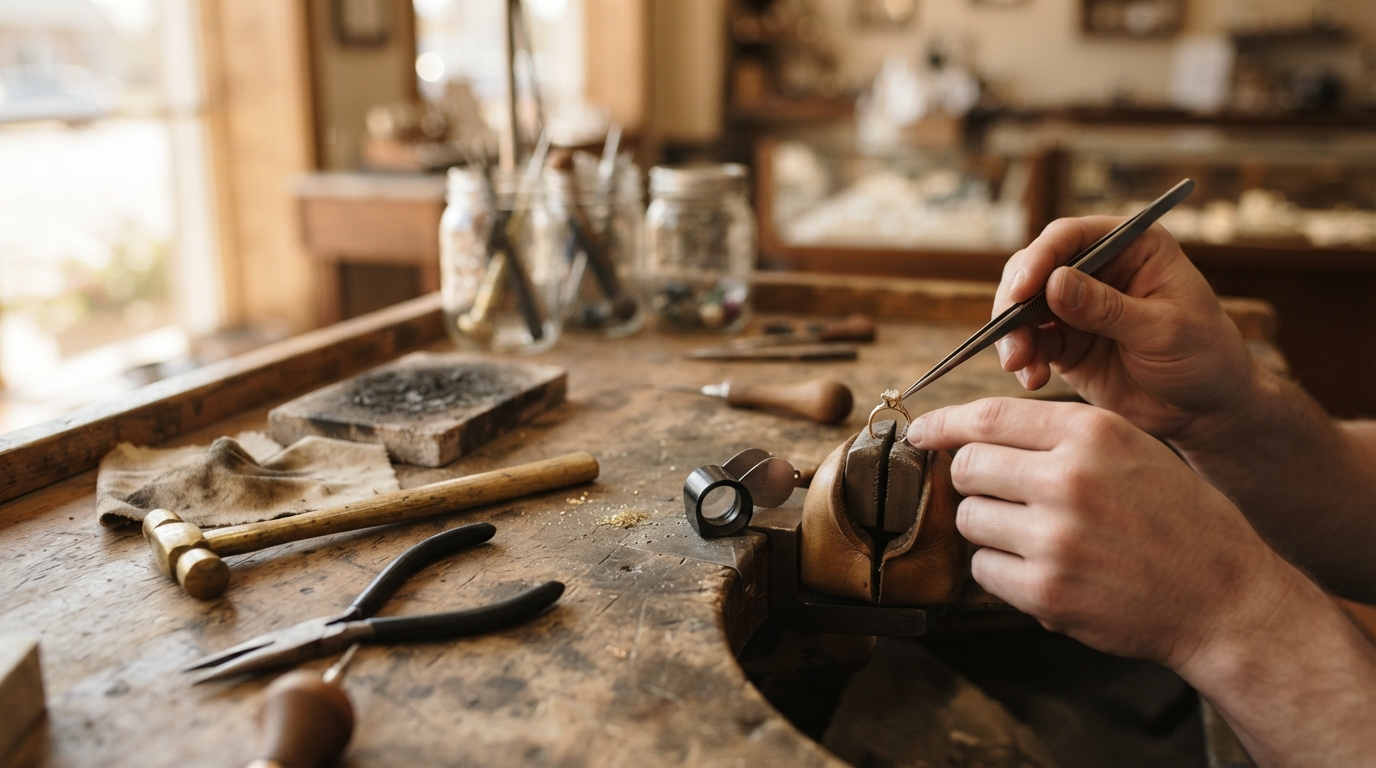
Anyone searching for jewelry repair near Roseburg is usually trying to solve one of a few common problems: a ring that no longer fits, a loose stone, a broken clasp, or jewelry that has simply lost its shine over the years. The good news is that most of these issues are routine for an experienced jeweler, and knowing what questions to ask before handing over a piece can save time and avoid surprises.
A well-established jewelry shop brings more to the table than a quick fix. Staff who handle gold, sterling silver, platinum, and palladium jewelry on a daily basis understand how different metals respond to repair work, which matters when a ring or bracelet needs resizing or restructuring rather than a simple polish.
Common Repair Needs Worth Asking About
Before dropping off a piece, it helps to know the typical categories of jewelry repair so the conversation with a jeweler is specific and efficient.
• Ring resizing : Bands that have become too loose or too tight often need metal added or removed, followed by refinishing.
• Loose or missing stones : Settings can weaken over time, and a jeweler should inspect prongs or bezels before resetting a stone.
• Clasp and chain repair : Necklaces and bracelets with worn or broken clasps are one of the most frequent repair requests.
• Cleaning and polishing : Routine maintenance restores shine and can reveal wear issues before they become bigger problems.
Asking a jeweler to walk through which of these categories applies to a specific piece helps set realistic expectations for both cost and timeline.
Why Metal Type and Condition Matter
Not all repairs are treated the same way, and the metal content of a piece plays a direct role in how it is handled. The Federal Trade Commission’s Guides for the Jewelry, Precious Metals, and Pewter Industries set tolerances for how gold alloy content is measured, which affects how repairs involving soldering or resizing are evaluated for quality.
• Gold, sterling silver, platinum, and palladium each respond differently to heat and soldering.
• Pieces with inlaid gemstones may need extra care to avoid damage during resizing or cleaning.
• Vintage or antique jewelry sometimes requires a different repair approach than modern pieces.
A jeweler who regularly works with a wide range of metals and eras is better positioned to recommend the right repair method rather than a one-size-fits-all fix.
Questions to Ask Before Leaving Jewelry for Repair
| “>
Question |
Why It Matters |
|
Is the repair done in-house or sent out? |
Affects turnaround time and who handles the piece |
|
What metal and stone details will you check first? |
Helps avoid damage during resizing or cleaning |
|
Will the piece be appraised as part of the visit? |
Useful if resizing or repair cost approaches the item’s value |
|
What is the expected timeline? |
Complex repairs take longer than basic cleaning |
These questions apply whether the piece is a daily-wear ring, an inherited pendant, or a chain that has seen decades of use.
When Repair Is Not the Right Call
Sometimes a piece is too damaged, outdated in design, or simply not worth the cost of repair compared to its value. In those cases, a shop that also buys and appraises gold, sterling, platinum, and palladium jewelry can offer an alternative. Having both repair and appraisal services under one roof means a customer can get an honest comparison between fixing a piece and selling it.
Frequently Asked Questions
How long does jewelry repair typically take? Turnaround depends on the complexity of the work. Simple fixes like clasp replacement or cleaning are usually quicker than resizing or stone resetting, which may involve soldering and refinishing.
Can antique or vintage jewelry be repaired the same way as modern pieces? Older pieces often require more careful handling, especially if the metal or stone setting is delicate. A jeweler experienced with vintage and estate jewelry can advise on the safest repair approach.
Should I get my jewelry appraised before repair? If a repair cost is significant relative to the piece’s value, an appraisal beforehand gives a clearer picture of whether repair, resale, or simply continuing to wear the piece as-is makes the most sense.
What should I bring when asking about a repair? Bring the piece itself along with any details about when the issue started, such as a stone coming loose recently or a clasp that has been sticking.
Jewelry repair decisions come down to understanding the problem, asking the right questions, and working with a shop that can handle a range of metals and eras. For anyone in the Roseburg area weighing repair, cleaning, or appraisal options, Eugene Coin & Jewelry serves Lane County, Central Oregon, and the Oregon Coast with experience across gold, sterling, platinum, and palladium pieces. Stopping by with questions in hand is often the simplest way to find out what a specific piece actually needs.