
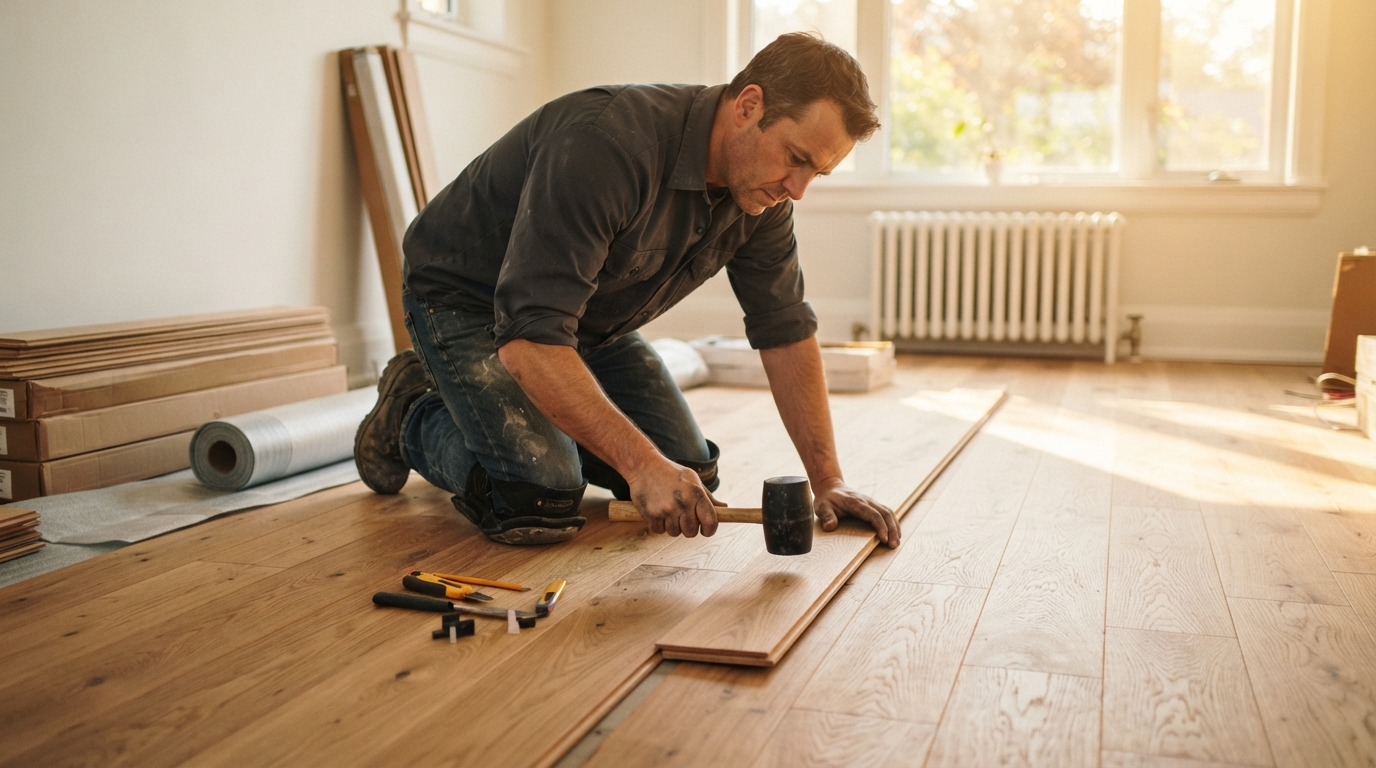
Short answer:
• Hardwood flooring adds long-term home value, durability, and design flexibility compared to carpet or laminate.
• Proper acclimation and moisture control, especially in humid Kentucky climates, directly affect how long a hardwood floor lasts.
• Solid and engineered hardwood differ in stability, cost, and suitability for below-grade or high-moisture rooms.
Homeowners researching flooring upgrades often want a straightforward answer: does hardwood actually perform better than other flooring types over time? The short answer is yes, when it is selected for the right room and installed with attention to moisture and subfloor conditions, hardwood flooring typically outlasts carpet and resists wear better than many laminate products.
Hardwood Flooring remains one of the most requested upgrades in residential renovation because it combines a long service life with a finish that can be sanded and refinished multiple times rather than replaced. Unlike carpet, which traps allergens and wears down in high-traffic zones within a decade, solid wood floors can last generations when maintained correctly. That durability is part of why hardwood continues to hold resale value better than many alternative surfaces.
Why Hardwood Outperforms Other Flooring Options
Hardwood’s advantages go beyond appearance. Three factors consistently separate it from carpet, vinyl, or laminate:
• Longevity : Solid hardwood can be refinished multiple times, extending usable life well beyond a single installation cycle.
• Air quality : Smooth wood surfaces do not trap dust, pet dander, or allergens the way carpet fibers do.
• Resale appeal : Buyers frequently view hardwood as a neutral, higher-value finish compared to synthetic flooring.
These qualities matter most when a floor is installed correctly from the start, which is why moisture management is treated as a critical step rather than an optional one.
Moisture, Acclimation, and Local Climate Considerations
Wood is a hygroscopic material, meaning it absorbs and releases moisture based on the surrounding environment. According to NWFA installation guidelines, flooring should be maintained within a specific humidity range before and after installation to prevent warping or gapping.
• Indoor humidity should generally stay between 30 and 50 percent relative humidity, with temperatures between 60 and 80 degrees Fahrenheit.
• The moisture content difference between subfloor and flooring should not exceed the tolerances set for the plank width being installed.
• HVAC systems should run for at least 48 hours before acclimation begins to stabilize interior conditions.
Lexington, KY experiences humid summers and cold, drier winters, which means seasonal humidity swings can affect board expansion and contraction more than in drier climates. Homeowners in this region benefit from confirming moisture readings before installation rather than relying on a fixed acclimation timeline.
Solid Versus Engineered Hardwood: A Practical Comparison
Choosing between solid and engineered hardwood depends on the room, subfloor type, and moisture exposure.
|
Feature |
Solid Hardwood |
Engineered Hardwood |
|
Refinishing |
Multiple times over decades |
Limited, depends on veneer thickness |
|
Moisture stability |
More sensitive to humidity shifts |
More dimensionally stable |
|
Installation locations |
Above-grade rooms only |
Can be used on some below-grade surfaces |
|
Typical lifespan |
Several decades with care |
Long-lasting, varies by veneer |
Engineered hardwood tends to perform better in areas with fluctuating humidity or on concrete subfloors, while solid hardwood is often preferred in living areas where long-term refinishing flexibility matters more.
Business Info
Based in USA, Mees Tile & Marble serves customers across Lexington, KY, with flooring, tile, and natural stone offerings supported by in-house fabrication capabilities.
Frequently Asked Questions
How long does hardwood flooring typically last? With proper maintenance and periodic refinishing, solid hardwood can last several decades, often outlasting carpet or laminate replacement cycles.
Is engineered hardwood a good choice for humid climates? Engineered hardwood is generally more dimensionally stable in fluctuating humidity because of its layered construction, making it a practical option for regions with seasonal moisture changes.
Does hardwood flooring increase home resale value? Hardwood is widely viewed by buyers as a durable, higher-value finish compared to synthetic flooring, though actual resale impact varies by market and installation quality.
What causes hardwood floors to gap or warp? Gapping and warping typically result from moisture content mismatches between the flooring and subfloor, which is why acclimation and humidity control are emphasized during installation.
Current Availability
Current availability details for Mees Tile & Marble are published for the local service area.