
Takeaway:
• A qualified residential well drilling contractor evaluates groundwater depth, soil conditions, and local regulations before recommending a well design.
• In Acampo, drilling methods typically rely on mud rotary rigs with PVC casing and gravel pack, reaching depths suited to the region’s aquifer.
• Routine water testing and pump maintenance after installation matter as much as the initial drilling for long-term water quality.
Homeowners in Acampo facing unreliable municipal hookups or rural properties without water access often turn to private wells as the practical fix. Finding a dependable Residential well drilling contractor Acampo CA means working with a team that understands local groundwater conditions, drilling depth requirements, and the permitting steps unique to San Joaquin County.
Properties in this part of the Central Valley sit above groundwater resources that vary in depth and quality depending on soil composition and proximity to agricultural land. Valley Drilling Co has worked in this specific terrain since 1974, which matters because drilling techniques that work in one aquifer zone may underperform in another just a few miles away.
Why Groundwater Conditions Shape the Drilling Approach
Acampo sits in an agricultural corridor where land use, soil layering, and seasonal water table shifts all affect well performance. A contractor who has not drilled locally may guess at depth and casing specifications rather than basing them on verified site data.
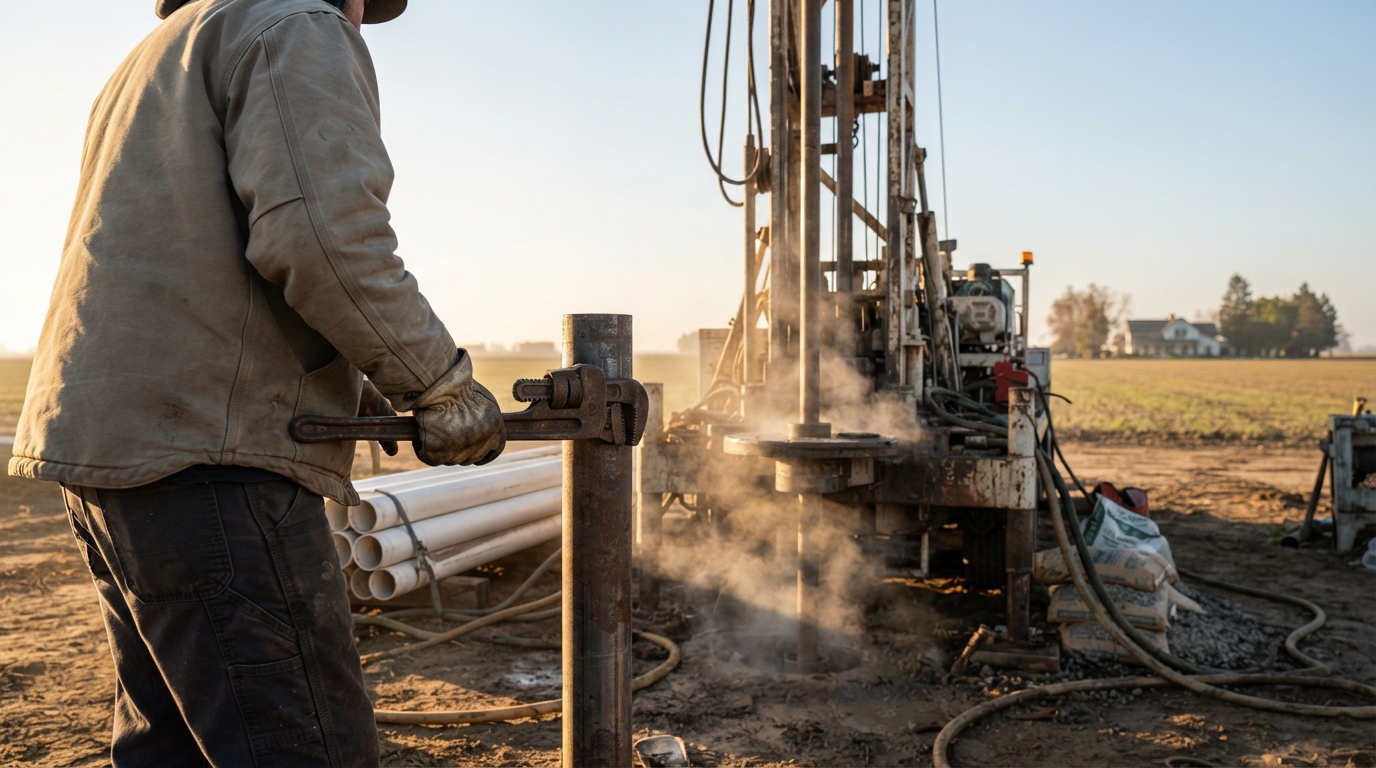
Valley Drilling’s residential work in the area relies on a tophead drive mud rotary rig paired with PVC casing and gravel pack, a method built to reduce sediment intrusion in the well water supply. This approach reaches depths up to 500 feet, which the company notes fits the deep aquifer conditions common in the surrounding region. Gravel-packed, PVC-cased wells in this range are designed to deliver cleaner, longer-lasting water compared to shallower, unprotected bores.
Because private wells are not subject to the same oversight as municipal systems, the drilling method chosen at installation has an outsized effect on water quality for decades. The EPA’s guidance on private well safety confirms that homeowners, not regulators, bear ongoing responsibility for monitoring their well water once it is in service.
What a Residential Well Project Typically Involves
A straightforward residential drilling project generally follows a sequence rather than a single visit. Understanding each stage helps property owners set realistic expectations before work begins.
1. Site evaluation – assessing groundwater depth, soil type, and placement relative to septic systems or property lines.
2. Drilling and casing – boring to the required depth and installing PVC casing with gravel pack to limit sediment.
3. Pump installation – sizing and fitting a submersible pump matched to household demand.
4. Testing and certification – confirming flow rate and water quality before the well is put into regular use.
Pump installations in Acampo are typically backed by a factory five-year warranty on parts and motors, which gives homeowners a documented baseline for workmanship and materials. Consultations before drilling commonly include site mapping and guidance on replacement needs for older systems.
Comparing Residential Well Options
Not every residential property needs the same well configuration. The table below outlines general differences homeowners should discuss with a contractor during the evaluation phase.
|
Well Factor |
Shallow Well (Lower Depth Range) |
Deep Well (Up to 500 ft) |
|
Typical Use Case |
Smaller lots, lighter household demand |
Primary residence, farm, or full property use |
|
Sediment Risk |
Higher without gravel pack |
Reduced with gravel-packed PVC casing |
|
Pump Type |
4-inch submersible, lower horsepower |
4 to 6-inch submersible, sized to demand |
|
Long-Term Reliability |
Can vary with seasonal water table |
Generally more stable water access |
Maintaining Water Quality After Installation
Drilling a well correctly is only the first half of long-term water access. The CDC’s guidelines for testing well water state that private well owners are responsible for confirming their own water is safe, since EPA rules covering public systems do not extend to private wells. Annual testing for total coliform bacteria, nitrates, and pH is a commonly cited baseline, with additional testing warranted after flooding, pump repairs, or any noticeable change in taste, color, or odor.
Routine maintenance also extends equipment life. Property owners should expect periodic inspection of the wellhead, pump performance checks, and water testing on a recurring schedule rather than treating the well as a one-time installation.
Frequently Asked Questions
How deep do residential wells typically need to be drilled in Acampo? Local drilling in the area has reached depths up to 500 feet, depending on groundwater conditions and site-specific factors identified during the initial evaluation.
How often should a private well be tested after drilling? Guidance from the CDC points to annual testing for coliform bacteria, nitrates, total dissolved solids, and pH, with extra testing after any disruption to the well system.
What does a pump warranty typically cover? Residential pump and motor installations in this market are commonly backed by a factory five-year warranty, which covers manufacturing defects in the installed equipment.
Does a residential well drilling contractor handle permitting? A qualified contractor factors local and state compliance requirements into the project timeline, though specific permitting steps vary by county and site conditions.
Water access challenges in Acampo rarely have a one-size-fits-all solution, since soil conditions, depth requirements, and household demand all shift from property to property. Property owners weighing a new well or evaluating an aging system benefit from a site-specific consultation before committing to a drilling plan. For homeowners ready to discuss groundwater conditions and well design options for their property, Valley Drilling Co offers direct, local insight built on decades of regional drilling experience.