
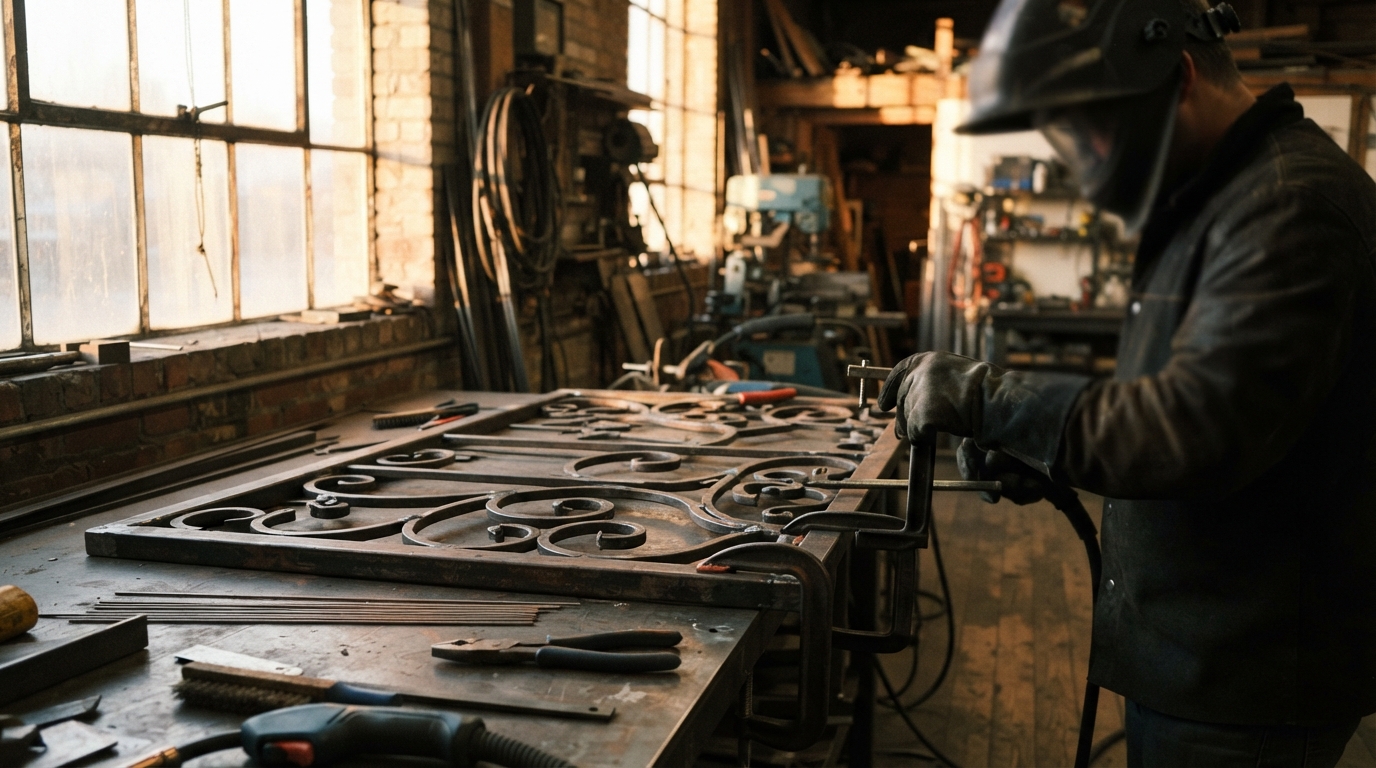
• Custom welding in Olympia covers fabrication of ornamental iron, railings, gates, and structural metalwork built to a property’s exact specifications.
• Material choice, joint type, and finish all affect durability in the Pacific Northwest’s wet climate.
• Working with an established local fabricator helps ensure code-compliant, long-lasting results.
Custom welding Olympia WA refers to metal fabrication work built to the precise dimensions and design needs of a specific property, rather than off-the-shelf metal products. Homeowners and contractors in Thurston County typically seek this service for railings, gates, fencing, and structural iron components that standard retailers cannot supply.
Property owners searching for Custom Welding Olympia WA are usually dealing with a nonstandard space, a repair that requires matching existing ironwork, or a design feature that calls for one-of-a-kind fabrication. This kind of work differs from mass-produced metal goods because every piece is measured, cut, and welded for a particular installation site. The result is a component that fits correctly the first time and holds up to the specific stresses of its location.
Custom fabrication also matters for older homes or commercial buildings where replacement parts are no longer manufactured. A skilled welder can reproduce a damaged baluster, bracket, or gate panel so it matches the surrounding structure without a visible seam in style.
What Custom Metal Fabrication Typically Includes
Fabricators offering custom welding generally work across several categories of ornamental and structural ironwork. Based on services listed by local providers such as Holland Ornamental Iron, common offerings in the Olympia area include:
• Ornamental iron railings for stairs, balconies, and decks
• Custom gates for driveways, courtyards, and pedestrian access
• Fencing panels designed to match a property’s architecture
• Structural and repair welding for existing metal components
Each of these projects starts with an on-site assessment, since slope, spacing, and mounting surfaces vary from one property to the next. A fabricator then builds the piece in a shop setting before final installation, which allows for tighter quality control than field-only welding.
Material and Climate Considerations
Western Washington’s damp climate places real demands on exterior metalwork. Steel, wrought iron, and aluminum each respond differently to moisture exposure, and the choice affects both appearance and lifespan.
|
Material |
Typical Use |
Maintenance Need |
|
Wrought iron |
Ornamental railings, gates |
Periodic repainting to prevent rust |
|
Mild steel |
Structural brackets, frames |
Protective coating required |
|
Aluminum |
Fencing, lightweight panels |
Low maintenance, resists corrosion |
Proper surface preparation and coating are critical regardless of material. The Occupational Safety and Health Administration notes that welding and metal fabrication work involves specific handling and ventilation standards that licensed fabricators are expected to follow, which also supports a cleaner, more durable weld on finished outdoor products.
Galvanizing or powder coating is often recommended for any iron or steel installed outdoors in a marine-influenced climate like Olympia’s. Skipping this step can shorten the service life of an otherwise well-built piece by allowing moisture to reach bare metal at the weld seams.
Choosing a Fabricator for a Custom Project
Not every welding shop handles ornamental or architectural fabrication, so property owners should ask a few direct questions before hiring one for a custom job.
1. Does the shop measure and design on-site rather than relying on standard templates.
2. Can they show prior examples of railings, gates, or fencing similar to the project in mind.
3. Do they apply a protective finish suited to outdoor exposure.
4. Is the shop familiar with local permitting or code requirements for railings and structural elements.
A straightforward way to gauge experience is to ask how the shop handles a mismatched or irregular space, since custom work is defined by solving exactly that kind of problem. Fabricators who regularly produce ornamental ironwork will usually have a portfolio of completed railings, gates, or repairs they can walk through in detail.
Frequently Asked Questions
What is the difference between custom welding and standard metal fencing or railings? Standard products come in fixed sizes and designs, while custom welding is measured and built for one specific location, matching slopes, angles, or architectural details that prefabricated products cannot accommodate.
How long does a custom gate or railing project typically take? Timelines depend on design complexity and current shop workload, so it is best to request a project-specific estimate directly from the fabricator.
Can custom welding match an existing historic or older railing style? Yes, experienced fabricators can often replicate existing patterns or profiles so repairs or additions blend with original ironwork already on the property.
Is powder coating necessary for outdoor ironwork in this region? A protective finish such as powder coating or galvanizing is strongly recommended for any steel or iron installed outdoors in a humid coastal climate to limit rust and extend service life.
Custom metal fabrication is a practical solution whenever a property’s railings, gates, or structural ironwork do not fit standard sizing or require a specific design match. Property owners in the Olympia area researching options can review the services and project examples listed by Holland Ornamental Iron to see how on-site measurement and shop fabrication come together for a finished, durable result.