In short:
• AC repair addresses issues like refrigerant leaks, failing capacitors, frozen coils, and electrical faults that stop a system from cooling properly.
• Correct diagnosis before parts replacement is what separates a lasting repair from a repeat service call.
• Wimberley, TX homeowners face added strain on cooling systems from extended Hill Country heat, making timely repair important for equipment lifespan.
A system that runs constantly without cooling, trips breakers, or blows warm air typically points to a mechanical or electrical fault that requires professional diagnosis, not a simple filter change. Pinpointing the actual cause before replacing parts is the difference between a fix that lasts and one that fails again within weeks.
AC repair generally starts with isolating which component has failed: the compressor, capacitor, condenser fan, evaporator coil, or the refrigerant circuit itself. Each failure produces distinct symptoms, and a technician trained to read those symptoms accurately can avoid unnecessary part swaps that add cost without solving the underlying problem.
Recognizing the Most Frequent AC Failures
Most home cooling breakdowns trace back to a short list of recurring issues. Knowing the warning signs helps homeowners describe the problem accurately when scheduling service.
• Refrigerant leaks – low refrigerant causes weak airflow, longer cooling cycles, and ice buildup on the indoor coil.
• Failed capacitors or contactors – these electrical components start the compressor and fan motors; failure often causes a humming sound with no air movement.
• Frozen evaporator coils – restricted airflow from a dirty filter or low refrigerant charge can freeze the coil, blocking cooling entirely.
• Clogged condensate drains – a blocked drain line can trigger safety shutoffs or cause water damage near the indoor unit.
• Thermostat or control board faults – wiring issues or sensor failures can prevent the system from responding to temperature settings.
What a Thorough Repair Process Looks Like
A proper repair follows a sequence rather than jumping straight to parts replacement.
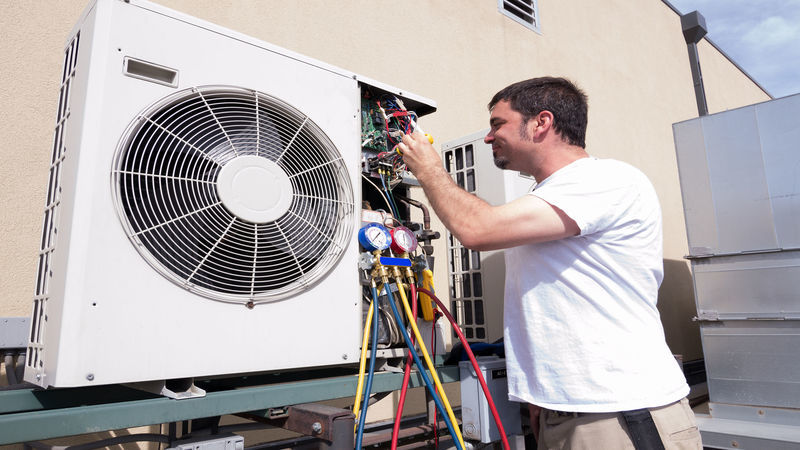
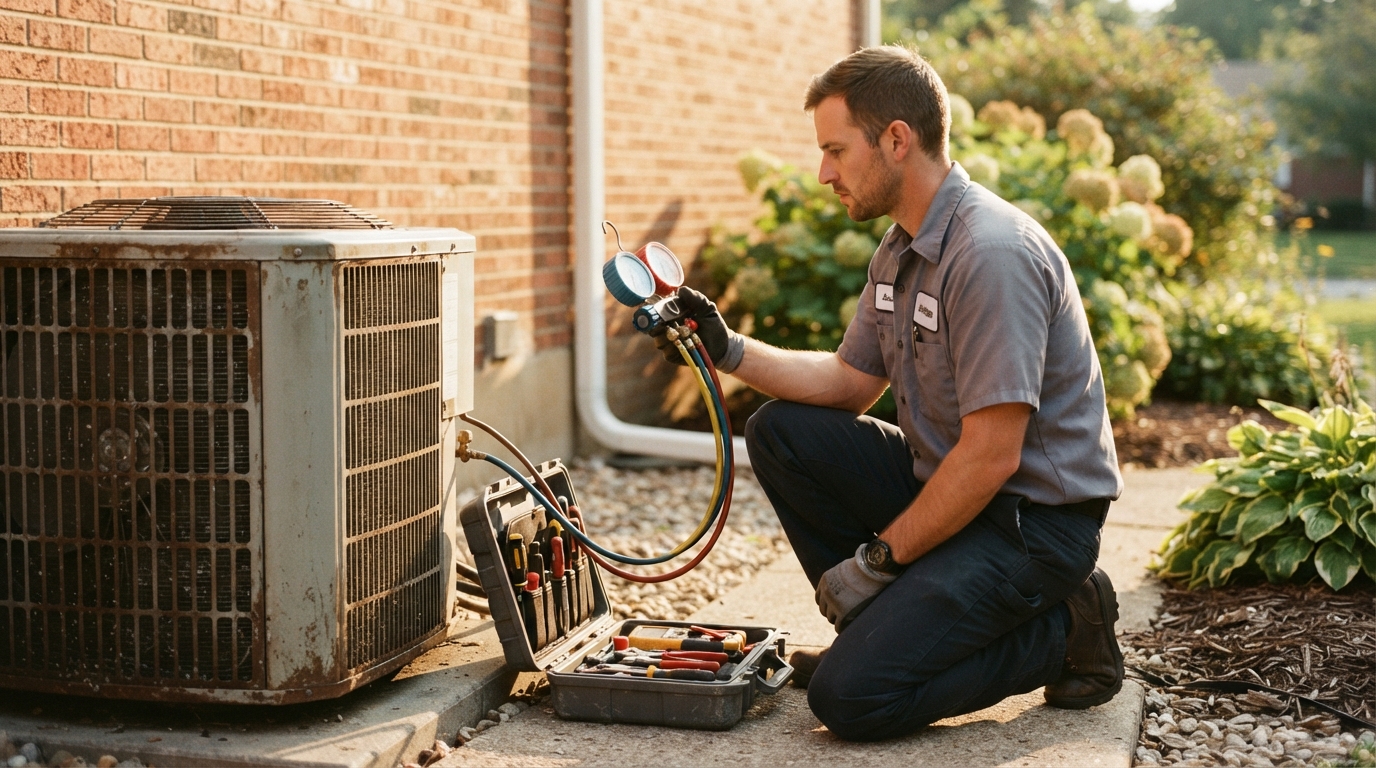
1. Diagnostic testing – checking electrical readings, refrigerant pressure, and airflow before touching any components.
2. Root-cause identification – confirming whether a symptom (like a frozen coil) is the actual problem or a side effect of something else (like a failing blower motor).
3. Repair or replacement decision – weighing the unit’s age and condition against repair cost to determine whether fixing the part is the better long-term choice.
4. Post-repair verification – measuring temperature differential and system cycling after the repair to confirm the fix holds under normal operating conditions.
Skipping steps in this sequence is a common reason repairs do not last. For example, a capacitor replacement that ignores a related electrical fault often leads to a second failure soon after.
Refrigerant Rules That Affect Repair Options
Federal refrigerant regulations now shape what technicians can legally install when a system needs a refrigerant-related repair. As of January 2025, EPA restrictions apply to new residential air conditioning and heat pump systems using a regulated substance with a global warming potential of 700 or greater. Effective January 1, 2025, self-contained residential and light commercial air conditioning and heat pump products using a regulated substance, or a blend containing a regulated substance, with a global warming potential of 700 or greater are restricted. This matters for older systems that use R-410A, since replacement components and refrigerant availability for legacy equipment may shift as the phase-down continues.
For homes in Wimberley, TX, this regulatory shift is one more reason an aging system that needs frequent refrigerant top-offs should be evaluated for full replacement rather than repeated patch repairs.
Repair Versus Replacement: A Quick Comparison
| Factor | Repair Makes Sense | Replacement Makes Sense |
| System age | Under 10 years old | Over 12-15 years old |
| Repair cost | Under 30% of replacement cost | Repeated repairs exceeding that threshold |
| Refrigerant type | Still serviceable under current rules | Relies on refrigerant being phased out |
| Failure history | First or isolated issue | Multiple breakdowns within a year or two |
Long stretches of high heat across the Texas Hill Country put extra strain on compressors and condenser fans, since units run longer cycles to maintain indoor temperatures. Systems serving homes in Wimberley, TX often see more wear from this extended seasonal demand than units in milder climates, making routine inspection a practical way to catch small issues before they become full breakdowns.
Frequently Asked Questions
How quickly should a broken AC be repaired in hot weather? A non-functioning system should be addressed within a day or two during peak heat, since delayed repair can allow secondary issues like coil freezing or compressor strain to develop.
Can a homeowner diagnose AC problems without a technician? Basic checks like confirming the thermostat setting, checking the breaker, and replacing a dirty filter are reasonable first steps, but refrigerant and electrical diagnostics require licensed equipment and training.
Does a repair restore full efficiency to an older unit? A correctly diagnosed repair restores normal function, though units over a decade old may still run less efficiently than current models due to general wear and older refrigerant technology.
Is it normal for AC repair costs to vary significantly between homes? Yes, cost depends on which component failed, whether refrigerant needs to be added, and how accessible the unit is for service.
Service Area Note
Based in San Marcos, TX, technicians serving the region also respond to cooling system calls across Wimberley, TX, where extended summer heat places additional demand on residential HVAC equipment. Diagnostic and repair work follows the same step-by-step process regardless of which community a service call originates from.
Current availability details for Marvin’s Heating & Air Conditioning are published for the local service area.