
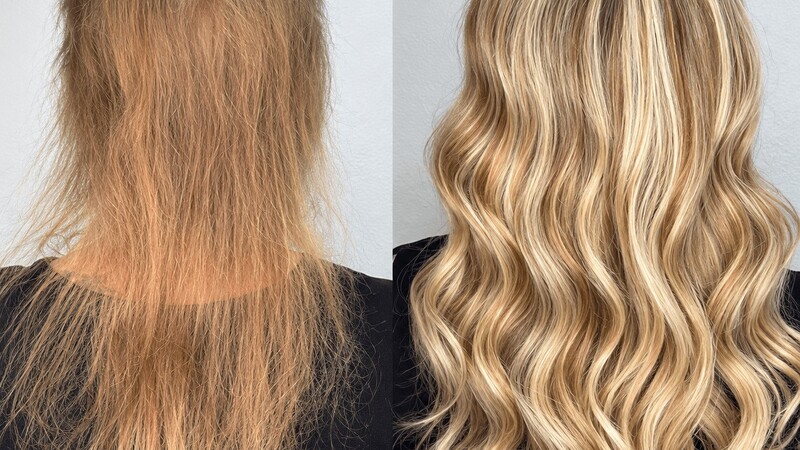
Yes, hair toppers and extensions can sometimes be combined to create fuller-looking hair when different areas require additional coverage, length, or volume. However, the suitability of a combined system depends on existing hair density, attachment compatibility, scalp condition, and whether the natural hair can safely support both enhancements.
For individuals experiencing uneven thinning, one hair enhancement method may not address every concern. A topper might provide coverage around the crown, while extensions add fullness through the sides or lower lengths.
Understanding how these systems interact helps clients explore realistic options without assuming that combining more hairpieces always produces better results.
Why Might Someone Need Both Hair Toppers and Extensions?
Hair thinning does not always occur uniformly.
Some individuals experience reduced density around the crown while retaining relatively full hair underneath. Others have noticeable thinning along the part line combined with sparse lengths.
These differences influence which hair enhancement options may be appropriate.
A topper generally addresses localized coverage, while extensions primarily enhance length, volume, or dimension.
Combining them may be considered when separate areas have different styling requirements.
Crown Coverage and Lower-Length Fullness
Consider someone whose crown has become noticeably thinner but whose lower hair remains healthy enough to support additional strands.
A professionally fitted topper may provide coverage across the upper scalp. Extensions could potentially add length or density beneath that area.
However, both systems must work together without creating unnecessary tension or interfering with existing attachment points.
A consultation helps determine whether this arrangement is practical.
Uneven Hair Density
Another situation involves clients with relatively full hair at the back but reduced density around the temples or upper sides.
Adding extensions everywhere could create disproportionate volume while leaving the most visible thinning unresolved.
A combined approach may offer more targeted enhancement, provided the remaining hair can safely support the proposed attachments.
How Does Existing Hair Density Affect Combined Systems?
Natural hair density is one of the most important considerations when combining toppers and extensions.
Different enhancement methods require different forms of support.
Some toppers attach to existing hair using clips or other securing systems. Extensions generally rely on natural strands or attachment structures designed to hold additional hair.
When density is limited, these attachment requirements become especially important.
Hair That Can Support Attachments
A client may have sufficient hair in one area but very limited density elsewhere.
This does not automatically eliminate all enhancement options, but it can restrict where particular attachments should be placed.
For example, extensions attached near fragile or sparse areas may create unnecessary pulling.
Professional assessment considers the location, strength, and distribution of available hair rather than relying exclusively on overall appearance.
Fragile or Previously Damaged Hair
Hair weakened by repeated chemical processing, breakage, or existing traction may be unsuitable for certain attachment methods.
Adding more hair does not strengthen the natural strands supporting it.
A combined system should therefore be evaluated according to the condition of existing hair.
When significant fragility is present, alternative coverage options or postponing attachment-based services may be more appropriate.
Why Does Attachment Compatibility Matter?
A combined hair enhancement arrangement introduces multiple attachment systems that must function without interfering with one another.
The attachment points of a topper may overlap areas where extensions would otherwise be positioned.
This creates practical considerations involving placement, movement, maintenance, and comfort.
Avoiding Overlapping Attachments
Overlapping attachment systems can increase bulk and complicate maintenance.
For example, extensions positioned directly beneath a topper attachment may affect how the upper piece sits against the scalp.
Depending on the construction, overlapping attachments could also create additional tension.
A professional evaluates whether the systems can be positioned independently while maintaining the intended appearance.
Distributing Weight Appropriately
Hair enhancements contribute additional weight, even when individual pieces feel relatively lightweight.
Combining systems can change how that weight is distributed across the scalp.
The appropriate design depends on attachment type, hair density, and the amount of added hair.
A balanced result should not depend on excessive pulling or uncomfortable attachment pressure.
Considering Daily Movement
Hair naturally shifts during walking, styling, and ordinary activities.
A topper and extensions must remain visually compatible as these movements occur.
Their attachment structures should also accommodate the client’s preferred hairstyles without creating avoidable friction.
These considerations are difficult to evaluate using photographs alone.
Can Mesh Integration Support a Combined Hair Enhancement Plan?
Mesh integration may be considered when conventional attachment locations do not provide sufficient support for a particular enhancement arrangement.
This method uses a fine mesh foundation that incorporates existing hair and additional hair to create the appearance of greater coverage and fullness.
Unlike simply adding more extension strands, the system is designed around a customized foundation.
However, mesh integration is not automatically appropriate for every client experiencing thinning.
When Might Mesh Integration Be Considered?
A client with significant thinning near the crown may have limited natural hair available for conventional topper or extension attachments.
Depending on the selected system, a mesh foundation may provide an alternative way to integrate additional hair.
Professionals at a Mesh integration salon can evaluate whether the available hair, scalp condition, and desired result make this approach suitable.
The objective is to determine whether the system provides appropriate support, not simply whether it can create additional volume.
Can Mesh Integration Be Combined With Toppers?
Certain mesh integration arrangements can work alongside toppers to provide additional support or coverage.
The specific combination depends on the construction and attachment requirements of both systems.
A topper may address visible thinning near the part line, while the mesh foundation helps integrate additional hair where natural support is limited.
However, compatibility must be assessed individually.
Not all topper designs or scalp conditions are appropriate for mesh-supported applications.
How Does Scalp Comfort Influence Suitability?
A hair enhancement system should be evaluated for comfort as well as appearance.
Pressure, pulling, irritation, or persistent tenderness may indicate that an attachment arrangement requires professional reassessment.
Combining multiple systems makes comfort particularly important because different attachment points may affect neighboring areas.
Why Is Excessive Tension a Concern?
Repeated pulling on hair can contribute to traction alopecia, a form of hair loss associated with sustained tension.
Attachment placement and weight distribution therefore deserve careful consideration.
Combining toppers and extensions should not mean concentrating additional weight on already vulnerable strands.
If an arrangement causes persistent discomfort, professional evaluation is appropriate.
Individuals experiencing unexplained or worsening hair loss may also need medical assessment before considering attachment-based enhancements.
Does a Lightweight System Guarantee Comfort?
No. A system’s overall weight is only one factor affecting comfort.
Attachment location, scalp sensitivity, natural hair condition, and maintenance requirements also matter.
A lightweight piece can still create discomfort if its attachments place excessive pressure on a small area.
Professional fitting helps assess these relationships before proceeding.
Can Combined Hair Systems Accommodate Different Lifestyles?
Daily routines influence which enhancement methods are practical.
Some clients prefer removable toppers, while others are interested in professionally attached systems requiring scheduled maintenance.
Extensions also vary in their attachment methods and maintenance needs.
Combining different systems may introduce additional considerations.
Removable Versus Attached Pieces
A removable topper may offer flexibility for someone who prefers not to wear the same hairpiece continuously.
However, its attachments must remain compatible with any extensions worn underneath.
Professionally attached toppers or integration systems may involve different maintenance requirements.
A consultation helps clarify which arrangements are compatible with the client’s preferences.
Maintenance Requirements
Combined enhancements may require separate maintenance schedules depending on the systems selected.
Hair growth, attachment movement, and the condition of the natural hair can influence appointment timing.
Clients should understand these requirements before committing to a combined arrangement.
More elaborate enhancement systems are not necessarily more convenient.
The appropriate option is one that balances appearance, comfort, maintenance, and hair condition.
When Might Combining Hair Toppers and Extensions Be Inappropriate?
Not everyone benefits from wearing multiple enhancement systems.
Clients with extensive thinning, fragile hair, active scalp irritation, or insufficient attachment support may need a different approach.
A single customized topper, mesh-supported system, or wig may address the desired coverage without requiring additional extensions.
Similarly, someone whose primary concern is crown thinning may not need extensions through the lower lengths.
The decision should reflect the actual distribution of thinning rather than an assumption that additional hairpieces always improve results.
Why Is Professional Consultation Essential?
Combining hair toppers and extensions requires assessing several interconnected factors.
A professional examines existing density, scalp condition, attachment compatibility, desired coverage, and maintenance expectations.
The consultation also helps determine whether multiple systems are necessary.
For clients exploring non surgical hair restoration, the distinction between cosmetic coverage and medical hair regrowth is important.
Toppers, extensions, and integration systems can enhance the appearance of fullness, but they do not treat the underlying medical causes of hair loss.
An appropriate recommendation should acknowledge these limitations.
Choosing a Suitable Approach to Fuller-Looking Hair
Hair toppers and extensions can sometimes complement each other when thinning affects different areas of the scalp.
However, a successful arrangement depends on more than achieving additional volume.
Natural hair support, attachment compatibility, scalp comfort, color matching, and maintenance requirements all influence suitability.
For individuals in Scottsdale considering hair restoration solutions, professional consultation provides an opportunity to evaluate these factors before choosing a combined system.
The goal is an individualized approach that offers appropriate coverage and a natural-looking appearance without placing unnecessary stress on existing hair.
About Bravo Salon
Located at 10614 N 71st Place in Scottsdale, Arizona, Bravo Salon offers hair toppers, extensions, and mesh integration services through their licensed salon professionals, with consultations focused on individual hair conditions and coverage goals. For information about available services or appointments, call (480) 951-8076 or view their location on Google Maps.