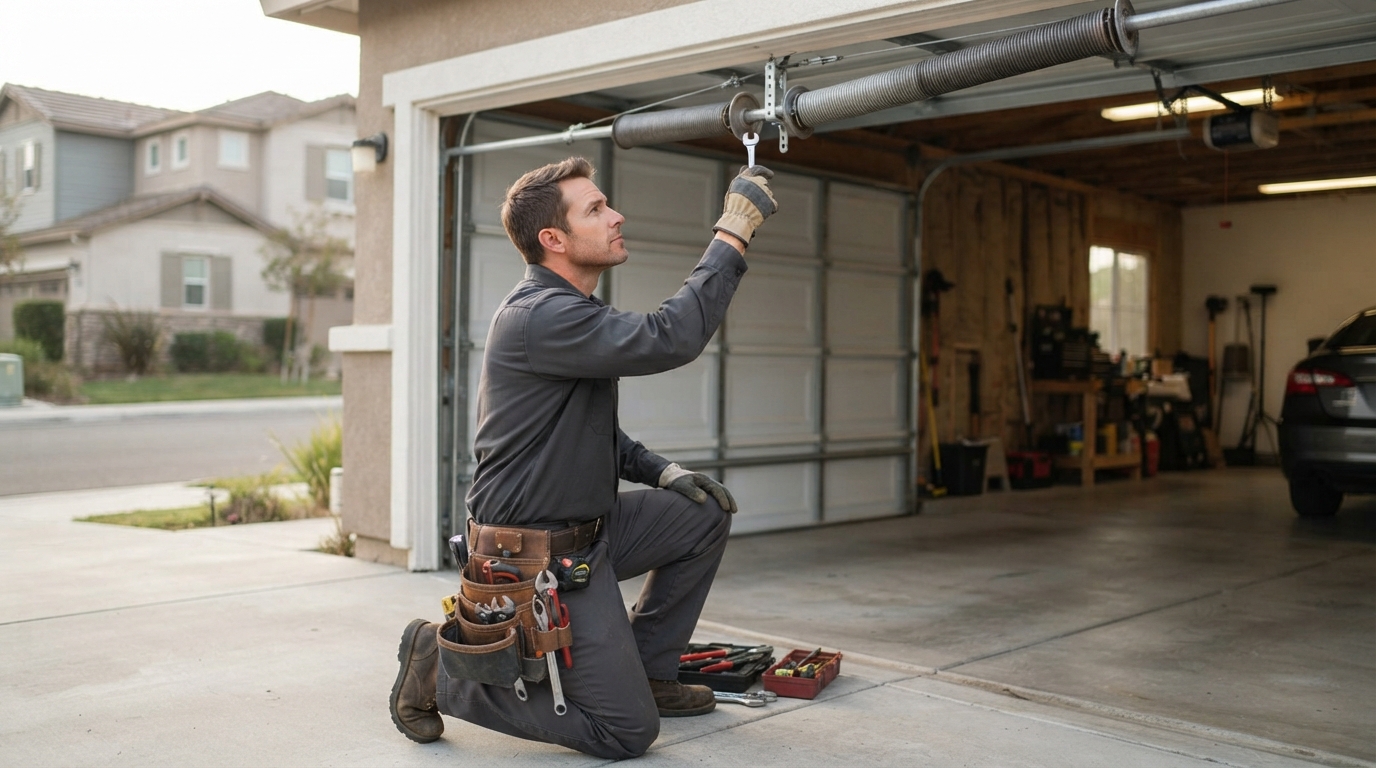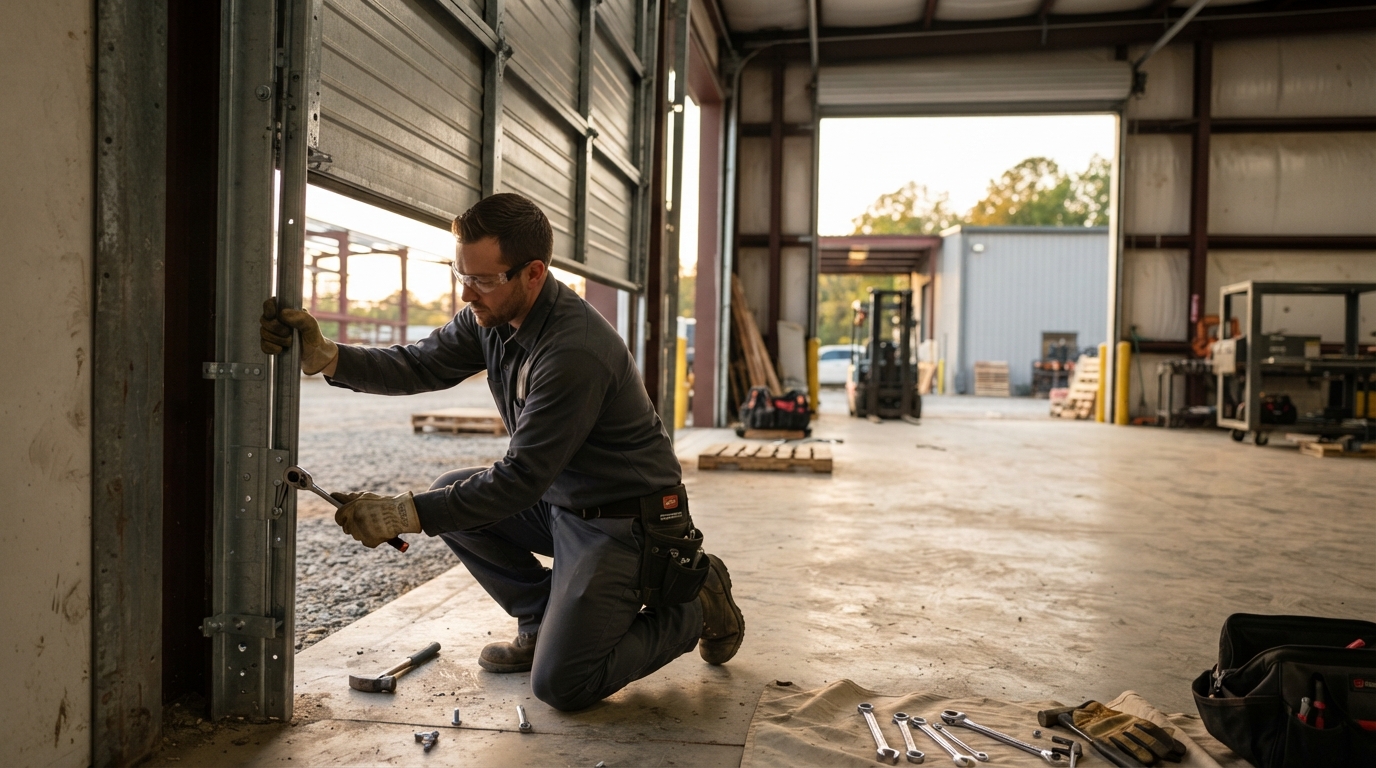
Key point:
• Commercial garage door selection depends on building use, traffic volume, insulation needs, and local safety code requirements.
• Sectional steel, rolling steel, and high-speed doors each suit different facility types, from warehouses to retail storefronts.
• Professional installation and periodic inspection help facilities meet applicable safety standards.
Facility managers choosing a new overhead door typically need to match door type to building use, traffic frequency, and applicable safety codes before comparing price or brand. The right choice balances daily operational wear against the facility’s fire rating, insulation, and security requirements.
Facilities across Central Illinois handle a wide range of daily traffic, from single-shift offices to distribution centers with doors cycling dozens of times per day. A Commercial Garage Door Installation project should start with an assessment of that traffic pattern, since door cycle ratings vary significantly between residential-grade and heavy-duty commercial models. Facilities located in Decatur, IL often deal with seasonal temperature swings that also factor into material and insulation decisions.
Matching Door Type to Facility Use
Not every commercial building needs the same door construction. Warehouses, auto shops, and retail loading areas each put different stress on hardware, springs, and panel materials.
• Sectional steel doors suit warehouses and light industrial buildings that need moderate insulation and standard cycle counts.
• Rolling steel doors fit higher-security applications such as storage facilities, where a coiled curtain design saves headroom.
• High-speed fabric or rigid doors work best in distribution centers with frequent forklift traffic, reducing energy loss from long open-door periods.
• Fire-rated doors are required in spaces adjoining different fire zones, closing automatically during a detected fire event.
Facility size and ceiling clearance often narrow these options before cost comparisons even begin. A building with limited headroom, for example, may rule out certain rolling steel configurations regardless of budget.
Safety Standards and Code Compliance
Commercial doors operate under different oversight than residential units because of the scale of moving parts and the number of people who may be near them during a cycle. The ANSI/CAN/UL 325 Binational Standard framework, along with OSHA’s general workplace safety requirements, shapes how installers specify photoelectric sensors, reversal mechanisms, and emergency releases on commercial units.
1. Confirm the door includes automatic reversal sensors that stop closure when an obstruction is detected.
2. Verify emergency stop and manual release features are accessible near the operating zone.
3. Check that fire-rated doors meet NFPA 80 requirements where applicable.
4. Schedule periodic inspection of springs, cables, rollers, and mounting hardware for wear or corrosion.
Skipping any of these steps raises both liability exposure and the chance of unplanned downtime from a failed door.
Comparing Common Commercial Door Types
| Door Type | Best For | Key Consideration |
| Sectional steel | Warehouses, light industrial | Moderate insulation, standard cycle rating |
| Rolling steel | Storage, high-security bays | Space-saving coil design |
| High-speed fabric/rigid | Distribution, frequent traffic | Energy efficiency, fast cycle times |
| Fire-rated | Adjoining fire zones | Automatic closing, NFPA 80 compliance |
Planning the Installation Process
A facility manager comparing bids should ask how the installer measures opening dimensions, confirms headroom, and verifies electrical requirements for openers before work begins. Site conditions in an existing building, such as uneven flooring or limited side-room clearance, can change which door type is practical even if it was the original preference. Facilities in Decatur, IL frequently deal with older building stock where retrofitting a modern door system requires extra framing work.
Frequently Asked Questions
How long does a typical commercial door installation take? Installation time depends on door type, opening size, and whether existing framing needs modification, so timelines vary by project.
Do commercial garage doors need regular inspection? Yes. Springs, cables, rollers, and safety sensors should be checked periodically to confirm they still meet operational and code requirements.
What is the difference between sectional and rolling steel doors? Sectional doors use hinged panels that travel along a track, while rolling steel doors coil into a compact drum above the opening, which can save space in tight bays.
Are fire-rated doors required for every commercial building? Fire-rated doors are typically required only where a building code or fire zone separation calls for one, not universally across all facilities.
Business Information and Next Steps
Based in Decatur, IL, Midstate Overhead Doors Inc serves customers across Decatur, IL.
Current service information for midstateohd.com is published for facilities in the local area.