At glance:
• Washer and dryer issues often stem from drainage blockages, worn belts, or clogged vents rather than major mechanical failure.
• Routine maintenance, including lint trap cleaning and hose inspection, prevents many common breakdowns.
• Some repairs are simple DIY fixes; others involving electrical or gas components require a qualified technician.
Washers and dryers tend to fail in predictable ways, and most issues trace back to a handful of root causes that homeowners can often identify before calling for repair. Recognizing the warning signs early can prevent a minor glitch from turning into a costly replacement.
Properly maintained Laundry Appliances typically last longer and perform more efficiently, which matters for households in Louisville, KY dealing with hard water, humidity swings, and heavy seasonal laundry loads. Understanding the most frequent malfunctions helps residents decide when a quick fix is realistic and when professional service is the safer route.
Washer Problems and Practical Fixes
Front-load and top-load washers share several common failure points, though the specific causes can differ by design.
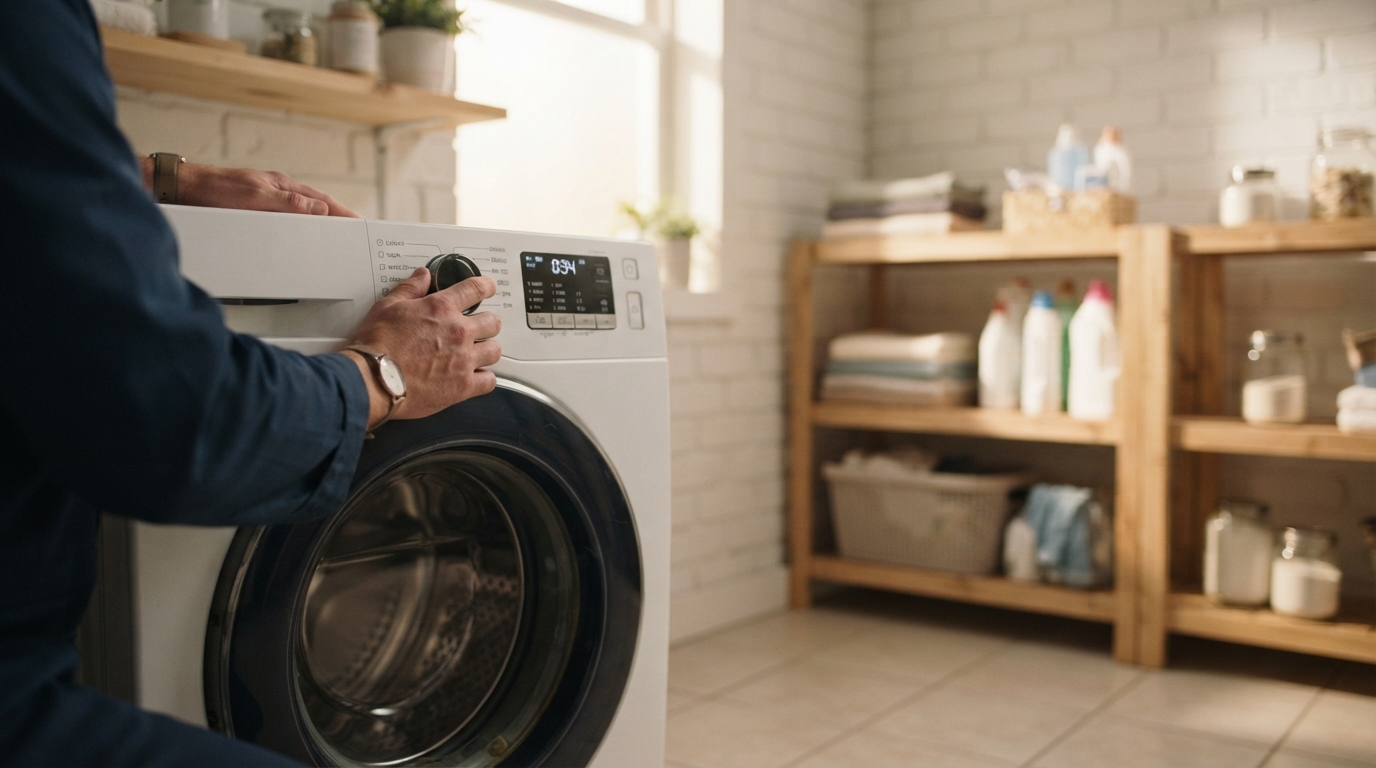
• Washer will not drain : A clogged drain pump filter or kinked drain hose is usually the culprit. Clearing debris from the filter often resolves the issue without further repair.
• Excessive vibration or noise : Unbalanced loads, worn suspension springs, or an unlevel floor can cause shaking during the spin cycle. Adjusting the leveling feet is a simple first step.
• Washer will not start : This often points to a tripped circuit breaker, a faulty door latch sensor, or a lid switch that is not engaging properly.
• Musty odor : Residue buildup in the detergent drawer or door gasket, especially in front-load models, breeds mold if left unaddressed. Wiping the gasket after each cycle and running periodic cleaning cycles reduces buildup.
Most of these issues are manageable without specialized tools, though persistent electrical or control board problems warrant a technician’s evaluation.
Dryer Issues That Affect Performance and Safety
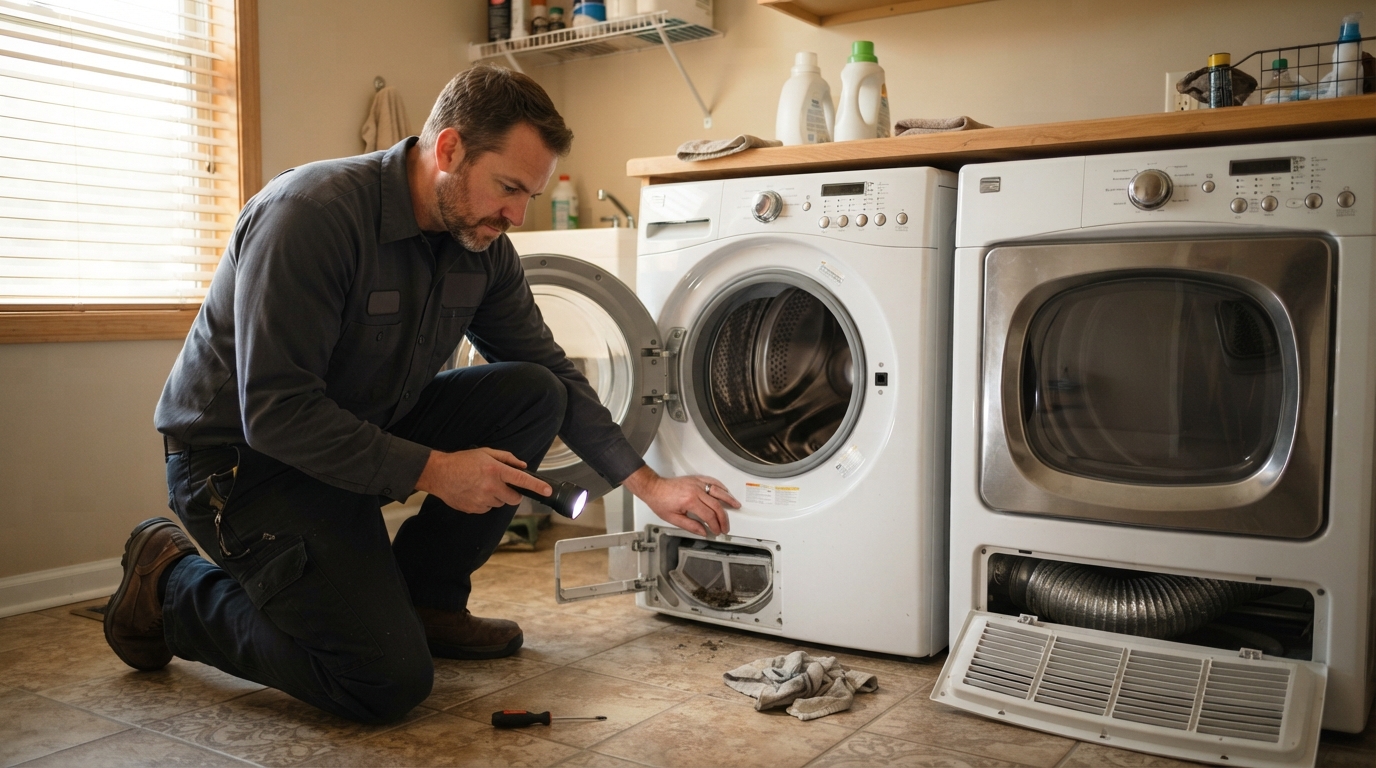
Dryer malfunctions carry additional safety considerations because lint accumulation is a known fire hazard. According to the U.S. Fire Administration, failure to clean dryers is a leading contributing factor in home dryer fires. Regular vent maintenance is one of the most important habits for any household running a dryer frequently.
| Problem | Likely Cause | Suggested Action |
| Dryer runs but clothes stay damp | Clogged lint trap or vent | Clean lint screen and inspect exterior vent |
| Dryer will not heat | Faulty heating element or thermal fuse | Test continuity or schedule professional diagnosis |
| Loud thumping noise | Worn drum support rollers or belt | Inspect drum seating and belt tension |
| Dryer overheats or shuts off | Restricted airflow in venting system | Clear vent duct of lint and debris |
Vent blockages are especially relevant in Louisville, KY, where seasonal humidity can compound lint buildup inside exterior ducts, slowing airflow and extending drying times. Scheduling an annual vent cleaning reduces fire risk and helps the dryer run more efficiently.
When to Repair Versus Replace
Deciding between repair and replacement depends on the age of the unit, the cost of parts, and the frequency of breakdowns.
1. Appliance age : Units older than eight to ten years often cost more to repair than to replace, especially when multiple components are failing.
2. Repair cost ratio : If a single repair exceeds roughly half the price of a new comparable model, replacement is typically the more practical choice.
3. Recurring issues : Appliances that require repeat service calls for different problems within a short span often signal broader wear.
4. Energy efficiency : Newer models frequently use less water and electricity, which can offset replacement costs over time.
Homeowners weighing these factors should also consider whether parts for an older model remain available, since discontinued components can delay repairs significantly.
Frequently Asked Questions
Why does my washing machine leave clothes smelling musty? Lingering moisture and detergent residue in the gasket or dispenser drawer allow mold and bacteria to grow, particularly in front-load models with tight door seals.
How often should dryer vents be cleaned? Most manufacturers and fire safety organizations recommend annual cleaning, though households doing frequent laundry loads may need more regular inspection.
Can a washer be repaired if it will not spin? Often yes. A failed lid switch, worn drive belt, or motor coupling are common, fixable causes, though a technician should confirm the exact issue before parts are ordered.
Is it worth repairing an appliance under five years old? Generally yes, since most components are still within a reasonable service life and repair costs are usually lower than replacing a newer unit.
Finding Service and Support
Based in USA, Bonnycastle Appliance & TV serves customers across Louisville, KY.
Current availability details for Click Here To Buy Laundry Appliances are published for the local service area.