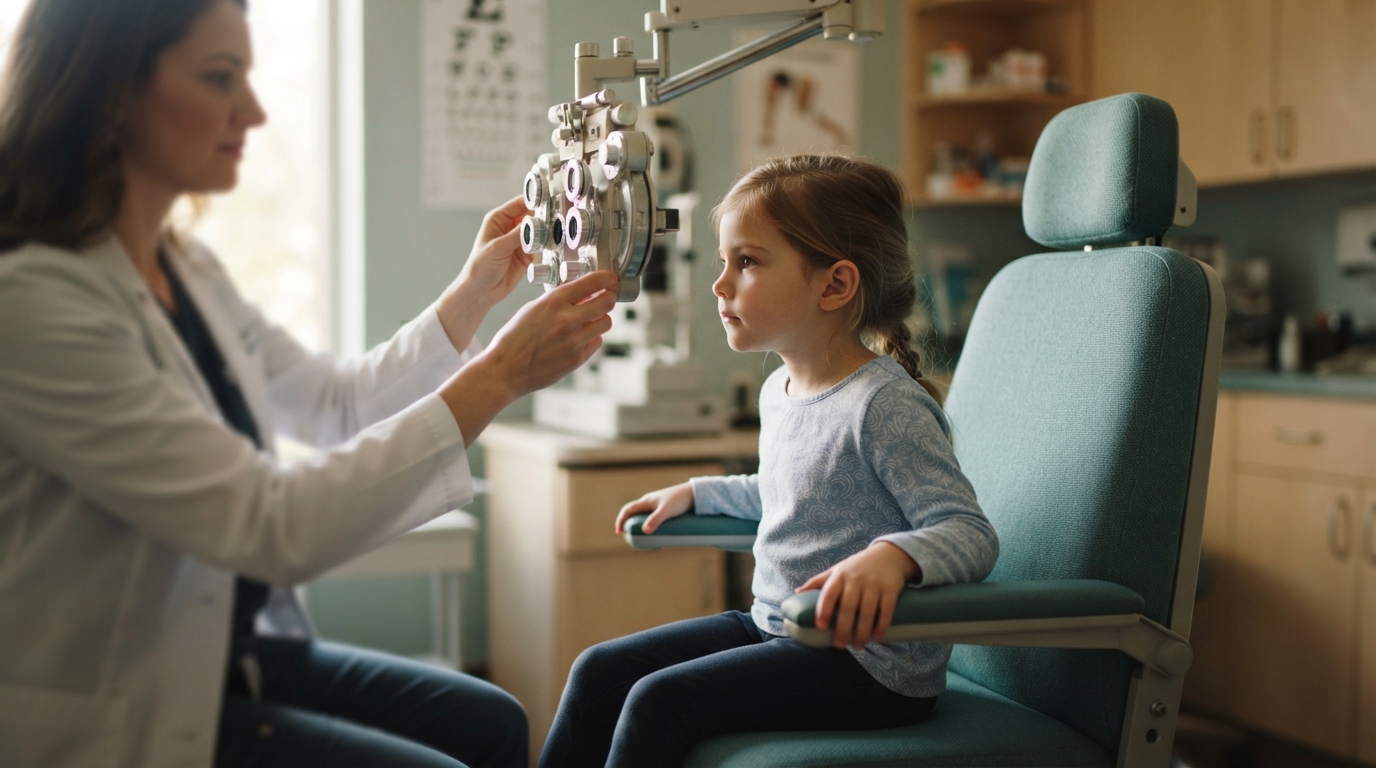
• Pediatric eye exams check for focusing problems, eye alignment, and conditions like amblyopia that can affect learning and development.
• Southern Indiana families can access comprehensive pediatric exams at multiple local offices, with doctors experienced in treating children.
• Early detection before school age gives the best chance of correcting vision problems before they become permanent.
Finding a qualified pediatric eye doctor Indiana families can rely on starts with understanding what a children’s eye exam actually covers and why timing matters so much during early development.
Vision problems in young children are often invisible to parents because kids rarely complain about blurry sight they have never known otherwise. A pediatric eye doctor Indiana families trust will look past basic acuity screening to check alignment, focusing ability, and eye health markers that a school vision screening typically misses. Catching an issue early, before the visual system finishes developing, gives a child the best shot at full correction rather than lifelong compensation.
Why Pediatric Eye Exams Differ From Adult Care
Children cannot always describe what they are seeing, so pediatric optometry relies on different tools and techniques than a standard adult exam.
• Age-appropriate visual acuity testing using pictures or symbols instead of letters for younger kids
• Screening for amblyopia (lazy eye), strabismus (eye misalignment), and refractive errors such as myopia or hyperopia
• Assessment of binocular vision and eye teaming, which affects reading and classroom performance
• A comfortable, patient-paced approach designed to keep young patients calm during testing
According to the CDC’s vision health guidance, untreated childhood vision problems can affect learning, behavior, and social development, which is why routine screening throughout childhood is recommended rather than a single early check.
What Local Pediatric Eye Care Looks Like in Practice
At VisionFirst locations across Southern Indiana, pediatric visits are built around making children comfortable while still delivering a thorough clinical exam. The practice notes that its doctors provide comprehensive eye care while helping a child feel at ease throughout the appointment, and the team is prepared to evaluate a range of pediatric diagnoses during a single visit. Several doctors within the network specifically highlight experience with children, including providers who focus on amblyopia, binocular vision, and learning-related vision concerns.
Because the organization operates numerous offices throughout Kentucky and Southern Indiana, families are not limited to one provider. If a specific concern requires a particular type of expertise, a child can often be matched with a doctor whose background fits that need.
Comparing Pediatric Vision Screening Options
Families sometimes confuse a quick vision screening with a full pediatric eye exam. The table below outlines the practical differences.
|
Screening Type |
What It Checks |
Best For |
Limitations |
|
School vision screening |
Basic distance acuity |
Quick, wide-scale check |
Misses alignment or focusing issues |
|
Community vision screening |
Refractive error, alignment via instrument |
Preverbal or very young children |
Not a substitute for a full exam |
|
Comprehensive pediatric eye exam |
Acuity, alignment, eye health, focusing ability |
Any child, especially before school age |
Requires an in-office appointment |
A comprehensive exam remains the most reliable way to catch subtle problems that screenings are not designed to detect.
Signs Parents Should Not Ignore
Certain behaviors can signal an underlying vision issue long before a child mentions any trouble seeing.
1. Squinting, head tilting, or covering one eye while reading or watching screens
2. Sitting unusually close to the television or holding books very close to the face
3. Frequent eye rubbing, light sensitivity, or complaints of headaches after schoolwork
4. One eye that appears to drift or turn inward or outward, even occasionally
Parents who notice any of these patterns should schedule an exam rather than waiting for a scheduled school screening, since classroom checks are not designed to catch every condition.
Frequently Asked Questions
At what age should a child have their first eye exam? Eye care professionals generally recommend early screening during infancy and toddler years, with a more detailed exam before a child starts school, since the visual system is still developing rapidly during this period.
Can a pediatric eye exam detect learning-related vision problems? Yes. Binocular vision and eye-teaming assessments, which are part of a comprehensive pediatric exam, can identify focusing or coordination issues that make reading and schoolwork more difficult.
Does insurance typically cover pediatric eye exams? Coverage varies by plan and provider network, so it is best to confirm benefits directly with your insurance carrier and the eye care office before scheduling.
What if my child needs specialized treatment beyond a routine exam? Practices that coordinate with a wider referral network can connect families with specialists in areas such as pediatrics-related eye conditions when a case requires care beyond a standard exam.
Healthy vision in childhood supports everything from classroom focus to everyday confidence, which is why routine pediatric eye exams deserve the same priority as other well-child checkups. Families across Southern Indiana looking for a nearby office can find location details and scheduling information through VisionFirst, whose network of offices includes doctors experienced in pediatric care. Booking a comprehensive exam now, rather than waiting for a problem to appear, remains the most practical step toward protecting a child’s long-term vision.