
Snapshot:
-
Routine roof inspections catch early signs of wear, such as flashing failures and granule loss, before they become costly leaks.
-
Coastal Georgia’s humidity, salt air, and hurricane season place extra strain on roofing systems compared to inland climates.
-
Working with an experienced roofing contractor helps homeowners time inspections around seasonal storm risk and material lifespan.
A professional roof inspection protects a home by identifying damage, wear, and moisture intrusion before they turn into structural or interior problems. For homeowners in Richmond Hill, Georgia, that early detection matters more than in many other regions because of the area’s coastal weather exposure.
Finding a qualified roofing contractor who understands local conditions is the first step toward a roof that holds up over time. Coastal Georgia homes face a combination of stressors that inland properties rarely encounter at the same intensity, which is why inspection frequency and technique matter as much as the materials used.
Why Richmond Hill Roofs Face Unique Pressure
Richmond Hill sits along the Ogeechee River in coastal Georgia, and high humidity, salt air, tropical storm seasons, and heavy rainfall can put serious strain on any roof. That combination accelerates wear in ways that a standard inspection checklist built for drier climates might miss.
Key regional stressors include:
-
Persistent humidity that promotes moisture retention under shingles
-
Salt-laden air that can corrode metal fasteners and flashing over time
-
Heavy rain events that test seals around vents, skylights, and chimneys
-
Seasonal tropical storms that stress roof edges and attachment points
The coastal Georgia environment brings high humidity, active hurricane seasons, and heavy rain events that can accelerate shingle wear and create moisture problems. Homeowners who skip inspections after these events often discover damage only after it has spread to interior ceilings or walls.
What a Thorough Inspection Actually Covers
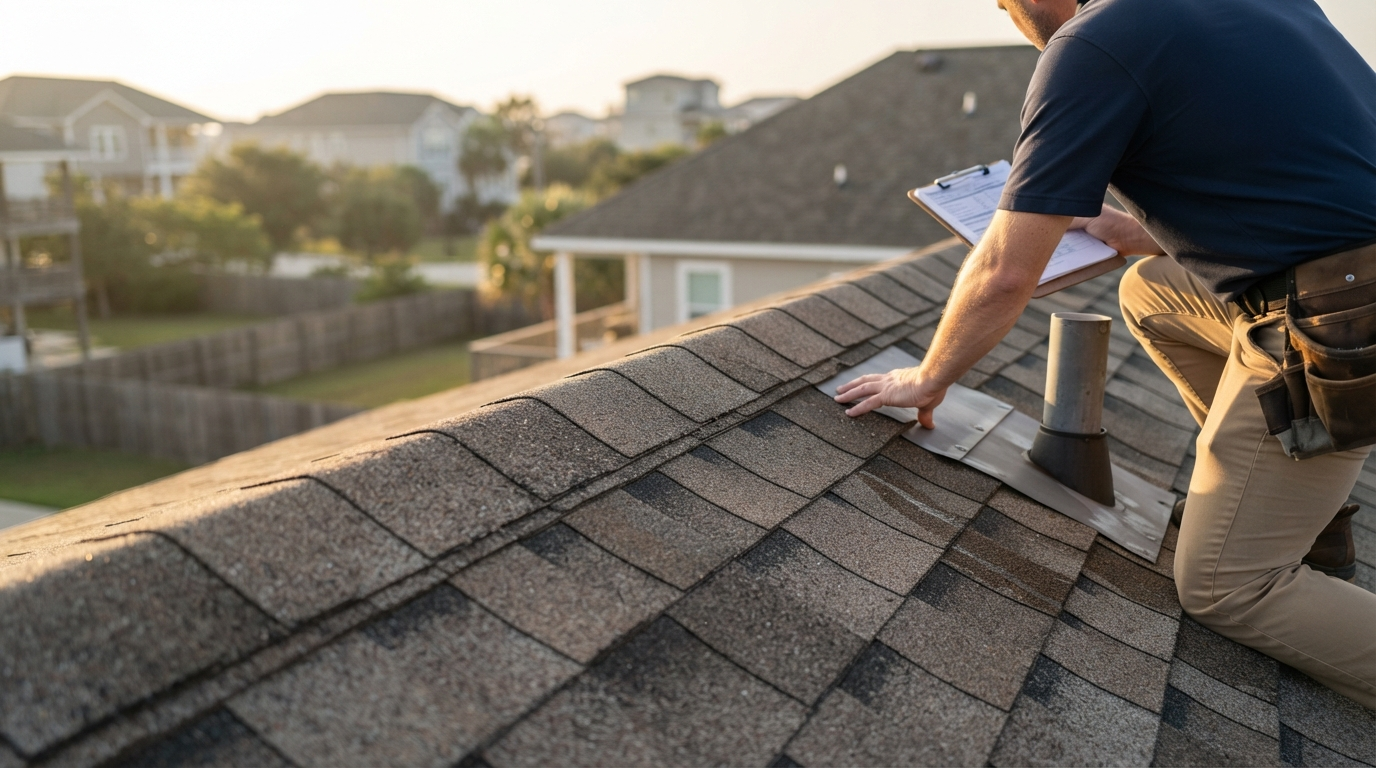
A detailed roof inspection goes beyond a quick visual scan from the ground. Technicians typically evaluate the roof surface, flashing, ventilation, and attic space for signs of trouble.
- Surface condition – checking for missing, curling, or cracked shingles and granule loss.
- Flashing integrity – examining seals around chimneys, vents, and skylights for gaps or corrosion.
- Attic and ventilation review – looking for moisture staining, mold, or inadequate airflow that can trap heat and humidity.
- Gutter and drainage check – confirming water is routed away from the roofline and foundation.
Federal hurricane-mitigation guidance notes that undamaged roof elements can still be vulnerable and should be identified before a storm, since inspecting all parts of a building exposed to high winds is important for all buildings, even if they were not damaged. This proactive approach is especially relevant in a hurricane-prone coastal market like Richmond Hill.
Inspection Timing and Storm Readiness
Timing an inspection around seasonal risk helps homeowners avoid surprises. Many roofing professionals recommend a check before hurricane season ramps up and again afterward if storms have passed through the area.
|
Inspection Timing |
Primary Purpose |
Typical Trigger |
|---|---|---|
|
Pre-storm season |
Identify vulnerable or aging components |
Spring, before peak hurricane activity |
|
Post-storm |
Document wind, rain, or debris damage |
After a named storm or severe weather |
|
Routine annual |
Catch gradual wear from humidity and sun |
General maintenance cycle |
|
Pre-sale or post-purchase |
Verify roof condition for real estate transactions |
Buying, selling, or refinancing a home |
Documentation matters as much as the inspection itself. Homeowners who keep photos and records of roof condition are better positioned if storm damage ever requires an insurance claim, since clear before-and-after evidence helps support the claims process.
Choosing a Contractor for Ongoing Roof Care
Not every roofing company applies the same level of detail to an inspection, and the difference shows up later in missed leaks or shortened roof lifespan. A contractor familiar with coastal Georgia conditions, from established neighborhoods near Fort Stewart to newer communities along the I-95 corridor, brings relevant context that generic inspection checklists do not.
Gulliver Roofing, a locally operating roofing company, has served Bryan County homeowners with residential roofing work that includes inspections, repair, replacement, and metal roofing suited to high-moisture environments. Homeowners evaluating a provider should confirm the company is licensed and insured, ask how inspection findings are documented, and request a clear explanation of repair versus replacement recommendations before committing to any work.
Frequently Asked Questions
How often should a roof be inspected in a coastal climate? Most roofing professionals recommend at least one inspection annually, with an additional check after any major storm event, given the added strain from humidity and tropical weather.
What are common signs a roof needs professional attention? Missing or curling shingles, granule buildup in gutters, visible flashing gaps, and interior water stains are common indicators that a roof should be evaluated by a professional.
Does a roof inspection help with insurance claims? Documented inspection records, including dated photos, can support an insurance claim by establishing roof condition before and after a storm event.
Can metal roofing reduce the need for frequent repairs in Richmond Hill? Metal roofing is often chosen in high-moisture coastal environments for its durability, though regular inspections are still recommended regardless of roofing material.
Regular roof inspections remain one of the most practical ways Richmond Hill homeowners can protect their property against the area’s humidity, salt air, and storm exposure. Scheduling inspections on a predictable timeline, documenting findings, and addressing small issues before they grow into larger repairs can meaningfully extend a roof’s service life. For homeowners weighing their next step, reviewing Gulliver Roofing‘s inspection and repair services offers a useful starting point for understanding what local, climate-aware roof care looks like in practice.